

The first time I went to Rishikesh, it was exactly what I expected it to be – cafés spilling out onto narrow lanes, yoga studios tucked into every corner, the Ganga moving steadily alongside it all, and a kind of chaotic calm that only a place like this can hold. It felt busy, spiritual, slightly performative in parts, but still memorable in its own way.
This time, it was something else entirely.
My Second Visit To Rishikesh
I wasn’t even staying in Rishikesh, not really. For close to 20 days, I was based out of Ganga Bhogpur, a short drive away, for Rider Mania 2026. While the event itself lasted just three days, I was there much longer, working with Brotherhood of Bulleteers Motorcycling Consortium – long enough for the place to stop feeling like a trip and start feeling like a temporary life. The kind where you know which turn leads where, where the mornings feel familiar, and where you stop looking things up and just exist in them.
Ganga Bhogpur doesn’t have the immediate pull of Rishikesh. There are no buzzing cafés, no obvious landmarks demanding your attention. It’s quieter, more spread out, with the river threading through it and the forest spread around us. Most days blurred into each other – work, long hours on-site, and then moments of stillness.
I split my stay between Panambi Resort and Jeevan Utsav Resort, both of which felt very much like extensions of the landscape rather than escapes from it. Panambi, in particular, is where I was based for over 15 days. It sits close to the river, and there’s something charming and homely about it. The rooms themselves are very simple, even slightly worn in places, but you stop noticing that after a while. You wake up, step outside, and spot everyone working like busy bees, which was oddly calming. Jeevan Utsav (image below)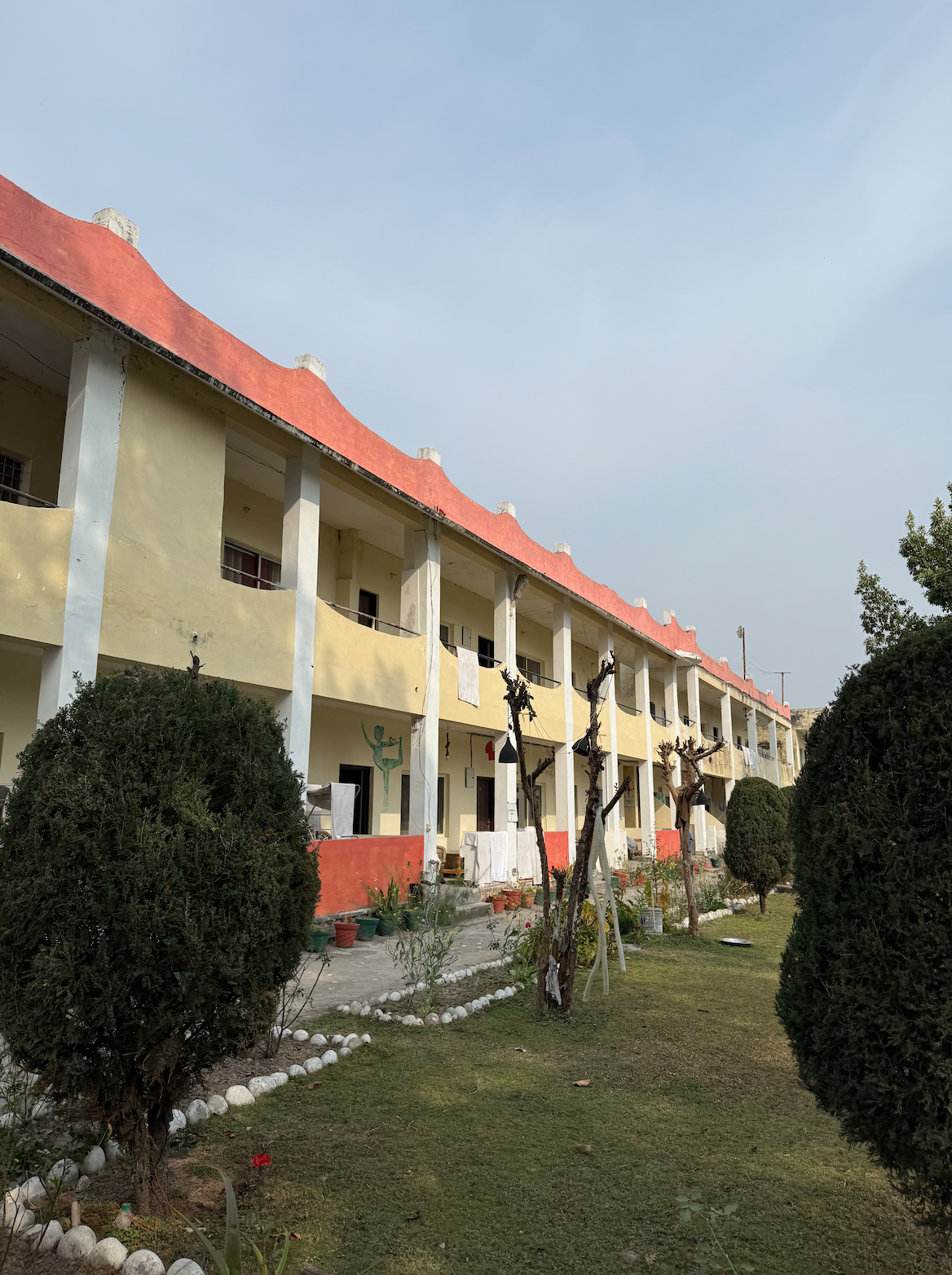

SAFARI AT RAJAJI NATIONAL PARK
During the Rider Mania event, one of the few things we stepped out to do was a safari at Rajaji National Park. It was a part of the offerings to attendees who wished to do it, and as my team at Digitally Scrambled was all on-site, we decided to go ahead and do it, too. Ideally, you go early in the morning or just before sunset, when the wildlife is more active. We went after lunch, which is considered one of the worst times for sightings, but it was the only slot we had, and it came bundled with the event. Skipping it didn’t feel like an option.
The experience began on a slightly odd note – we weren’t allowed to carry our phones inside. At first, it felt unnecessarily restrictive. You instinctively reach for your phone when you see something worth capturing, and not having that option feels like something is missing. But once we got deeper into the park, that absence started to shift into something else. You look longer. You notice more. You’re not trying to frame the moment – you’re just in it.
The drive itself lasted around two to three hours, moving slowly through terrain that felt rugged and untouched. There were stretches of dry riverbeds, patches of dense forest where visibility dropped suddenly, and long dusty trails that made everything feel a little harsher, a little more real.
For a while, it was just deer. Groups of them, scattered and watchful – spotted deer, sambar, the occasional barking deer disappearing almost as quickly as they appeared. And then, at a distance, movement that felt heavier. A herd of elephants, partially obscured by trees, moving slowly, almost quietly for something so large. There’s a certain stillness that falls over you in moments like that. Nobody really talks. You just watch.
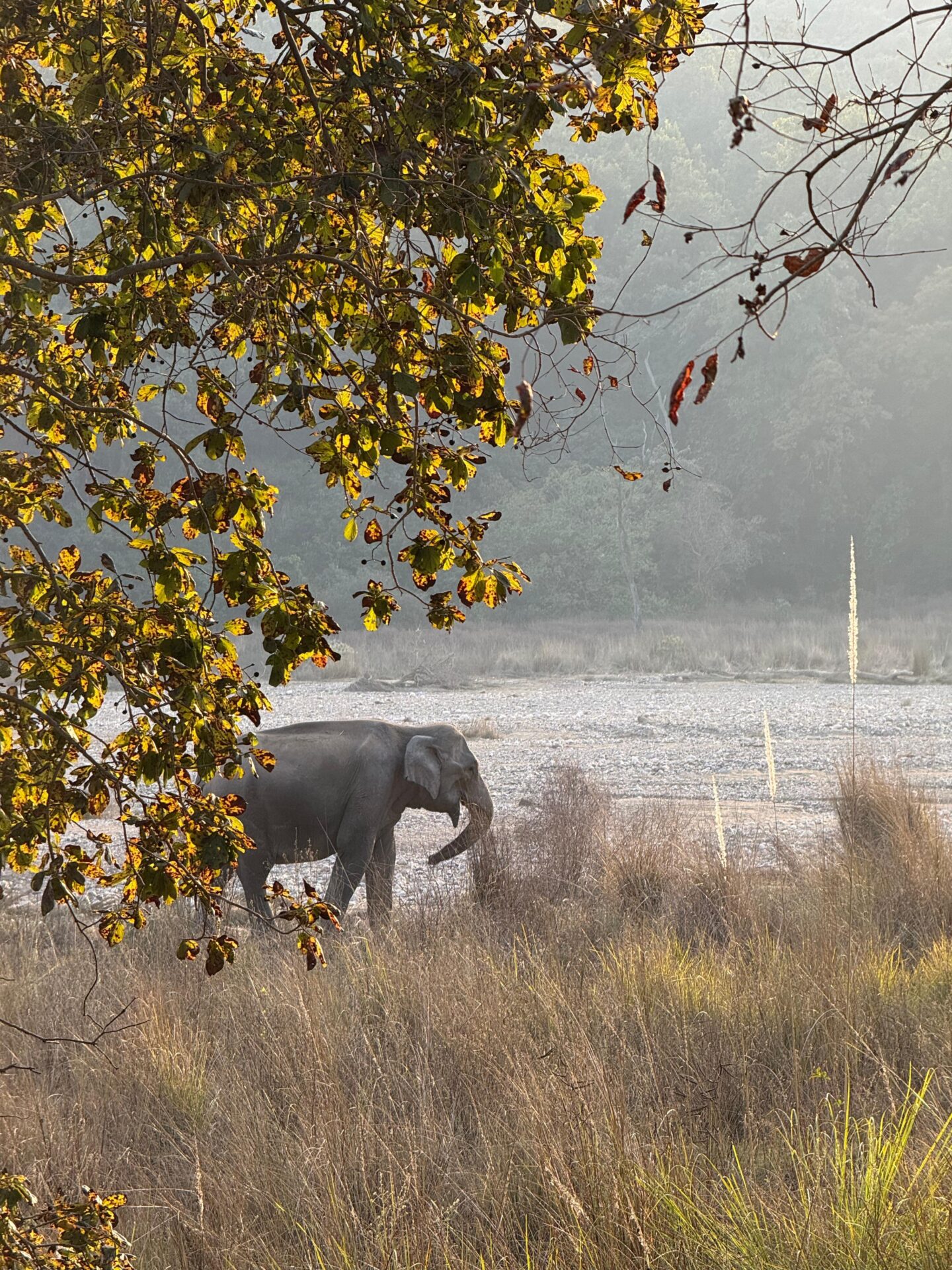

A little further along, we saw a lone tusker. Our guide mentioned, almost casually, that it was likely an outcast – separated from its herd, more unpredictable. There was something about that sight that lingered longer than the herd itself. Maybe it was the isolation, or just the awareness that this animal, on its own, carried a different kind of presence. It just stood there, distant but unmistakable.
By the time we exited the park, it didn’t feel like we had “seen everything,” but that didn’t matter as much as I thought it would. The experience wasn’t about ticking off sightings. It was slower, quieter, and strangely grounding.
The shift from that to river rafting the next day felt almost jarring.
RIVER RAFTING IN RISHIKESH
Rafting in Rishikesh is one of those things you hear about long before you actually do it, and it always sounds like a mix of adrenaline and chaos. It turned out to be exactly that, but also far more physical than I expected. We went as a group, and the energy started building even before we got on the raft. There’s a kind of collective excitement that takes over when everyone knows they’re about to be thrown into something unpredictable.
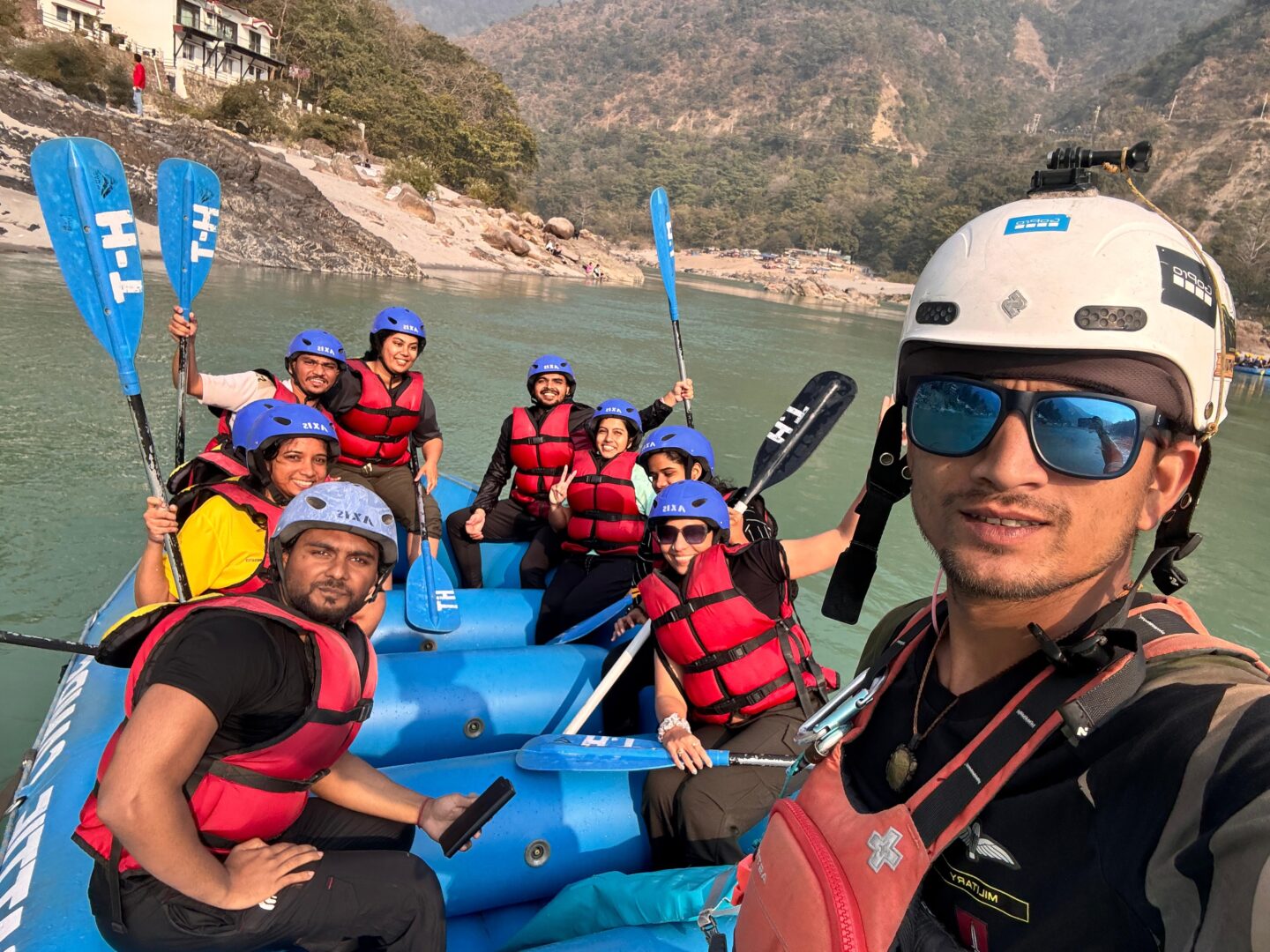

The lead-up to it, though, is far less romantic. The rafting office was cramped, not particularly clean, and very clearly not built to handle the volume of people moving through it. There was one washroom that everyone seemed to be sharing, and changing felt like a logistical challenge more than anything else. It’s one of those moments where you wonder if it’s worth it, and then you realise you’re already there, so it has to be.
If you’re looking to go river rafting in Rishikesh, it would be helpful to know that you can choose how many rapids you want to do – each of which have funny name. I think we chose 4-5 rapids or 9 lms. But you could go for up to 16 rapids or 34 kms. Some are significantly rougher than others – but don’t worry – it’s quite safe! It costs between Rs. 6000 and Rs. 8000, depending on the distance, difficulty and season.
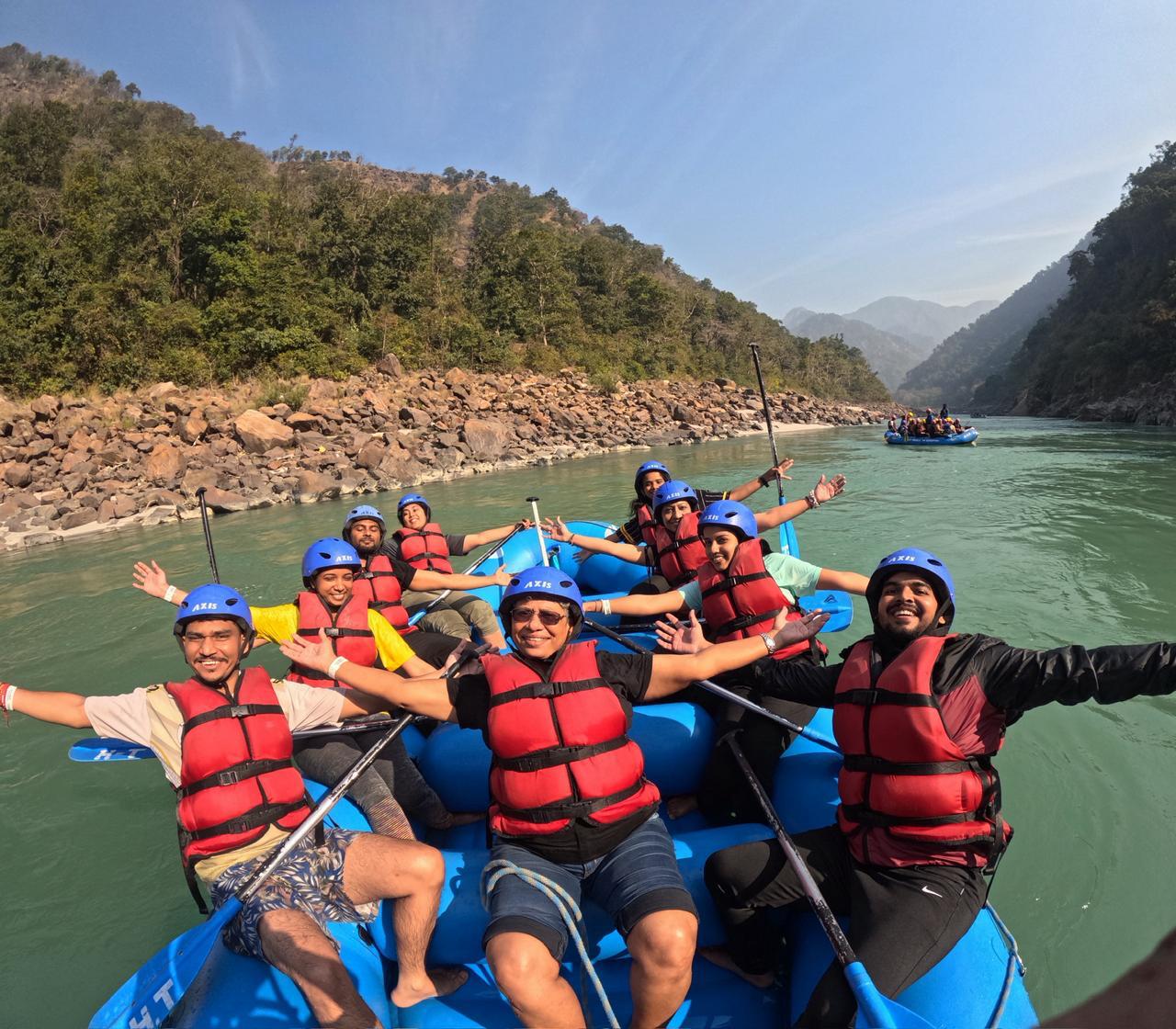

We were driven upstream in a jeep, packed in with life jackets and paddles, the road getting rougher as we went. By the time we reached the starting point, the entire experience felt suddenly more real.
The first thing that hits you when you get into the water is the temperature. It’s not just cold, it’s the kind of cold that shocks your system into alertness. Every splash feels exaggerated, every rapid a little more intense because of it. The stretch we did wasn’t the most difficult, probably one of the shorter routes, with moderate rapids, but in that moment, it didn’t feel mild. The guide kept shouting instructions, mixing them with chants that everyone eventually joined in on, half seriously, half laughing.
There were calmer stretches in between where the river slowed down, and you could look around for a second, the mountains, the banks, other rafts in the distance, but they never lasted long enough for you to fully relax. Just when you started to settle, another rapid would hit.
At one point, we were asked if we wanted to get into the water. I didn’t. Not really. But hesitation doesn’t always count in group settings, and before I could properly refuse, I was thrown in by the guide. The cold hit instantly, sharper than expected, and for a second, it was less about enjoyment and more about just getting back onto the raft. But once that passed, it shifted into something else, something that felt strangely freeing.
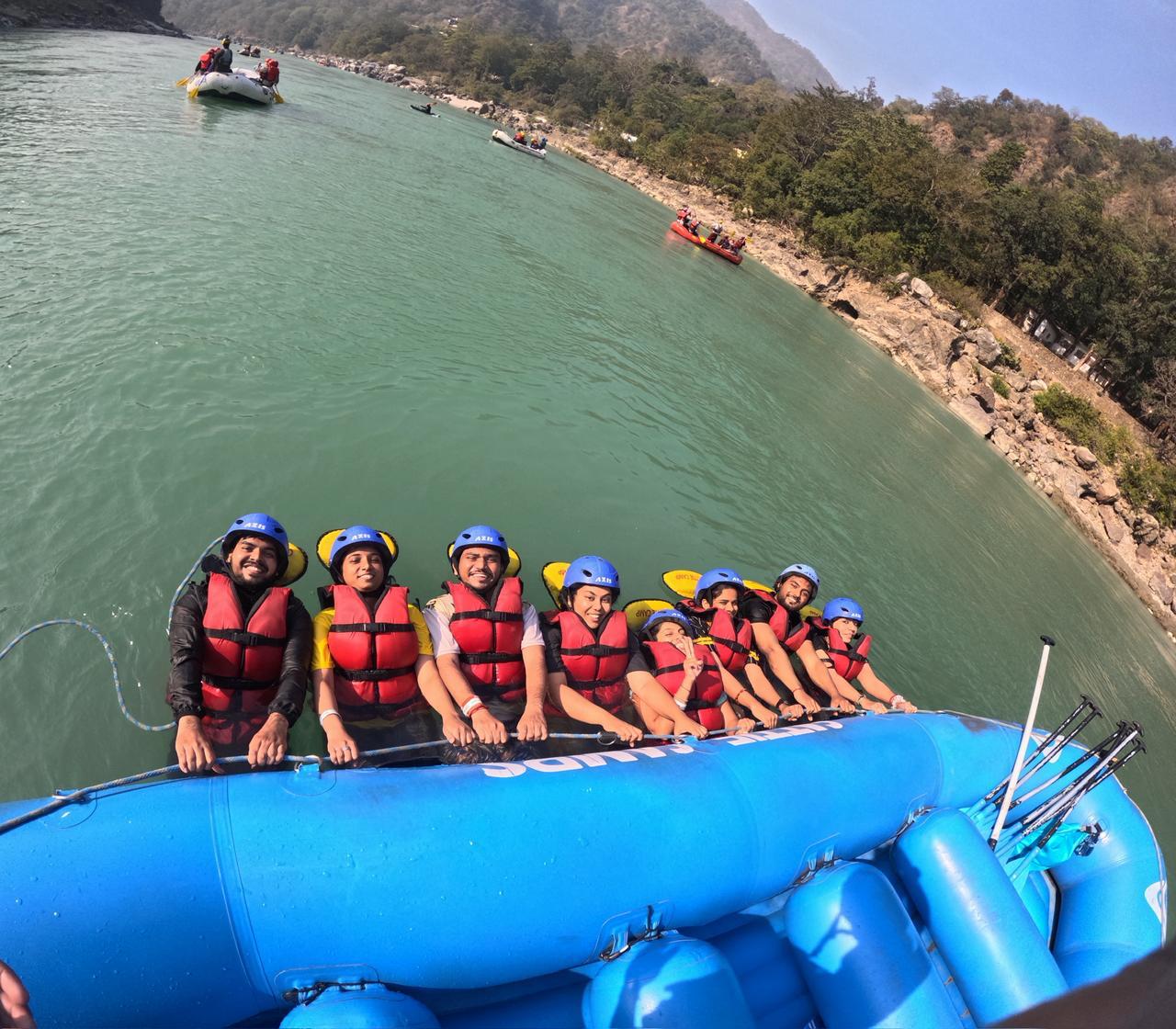
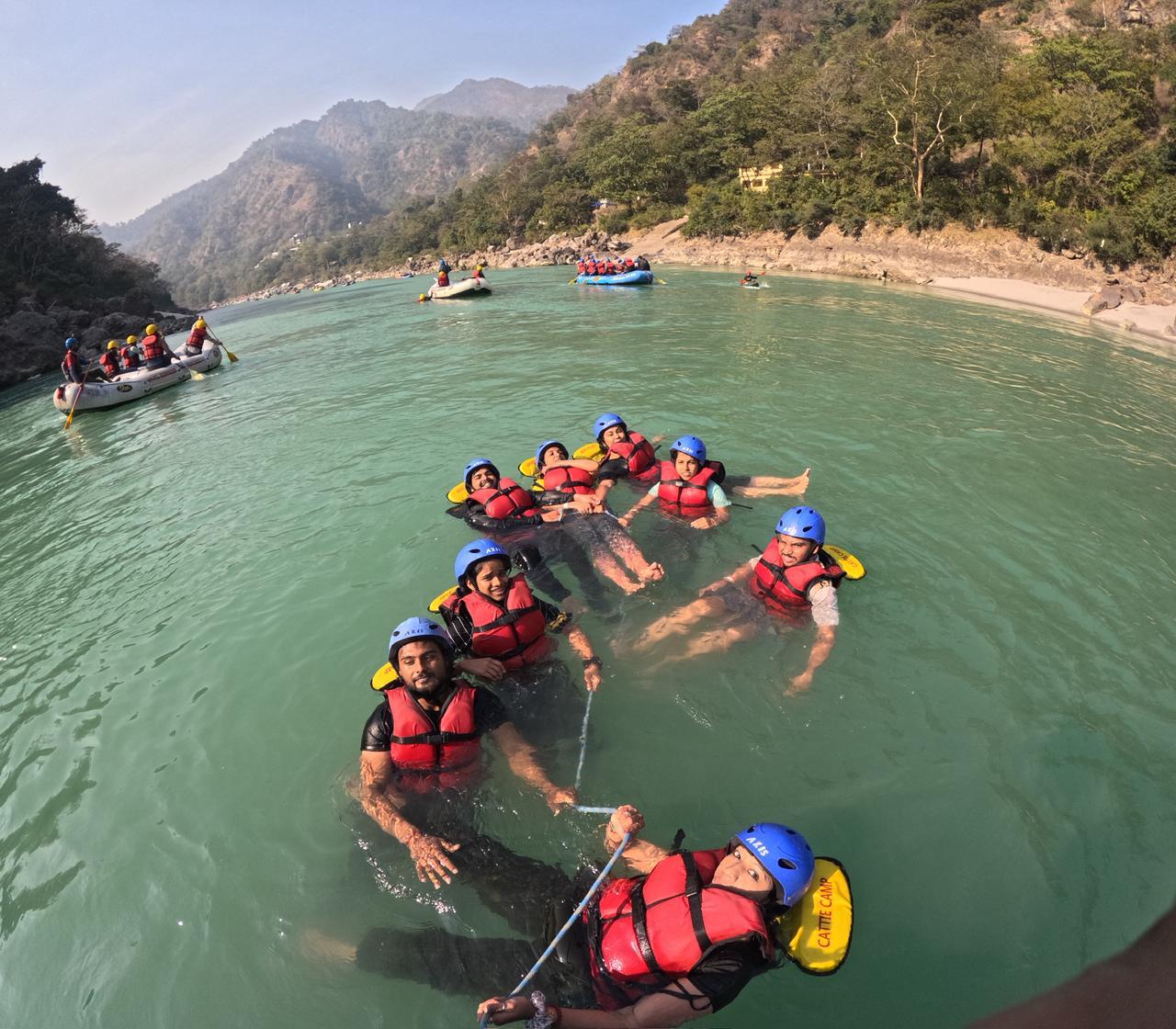
We stopped midway on a rocky patch by the river, where someone set up chai and Maggi. It sounds simple, but in that moment, after being drenched in ice-cold water and constantly bracing against the current, it felt disproportionally comforting. You sit there, warming your hands around a cup of chai, and for a brief moment, everything slows down again.
By the time we were done and heading back, tired, slightly sore, and still drenched, it felt like we had experienced a completely different version of the same place I had visited before.
This trip didn’t have the easy charm of my first visit. It wasn’t filled with pretty cafés or slow, aesthetic mornings. It was rougher in parts, less convenient, occasionally frustrating, but also more immersive in a way that’s harder to articulate.
Rishikesh, or at least this side of it, felt less like a destination and more like something you move through, experience in fragments, and carry back in ways you don’t immediately notice. Follow me on Instagram, X, and Facebook for more adventures!