
The backwaters of Kerala are one of those places you hear about so often, you start to wonder if they’re a bit overhyped.
They’re not.
This entire region is a network of rivers, lakes, lagoons, canals, and inlets – stretching over 900 kilometres – running almost parallel to the Arabian Sea. It’s not just scenic; it’s functional. These waterways have been used for centuries for everything from transporting spices and rice to everyday life – bathing, washing, getting from one place to another.
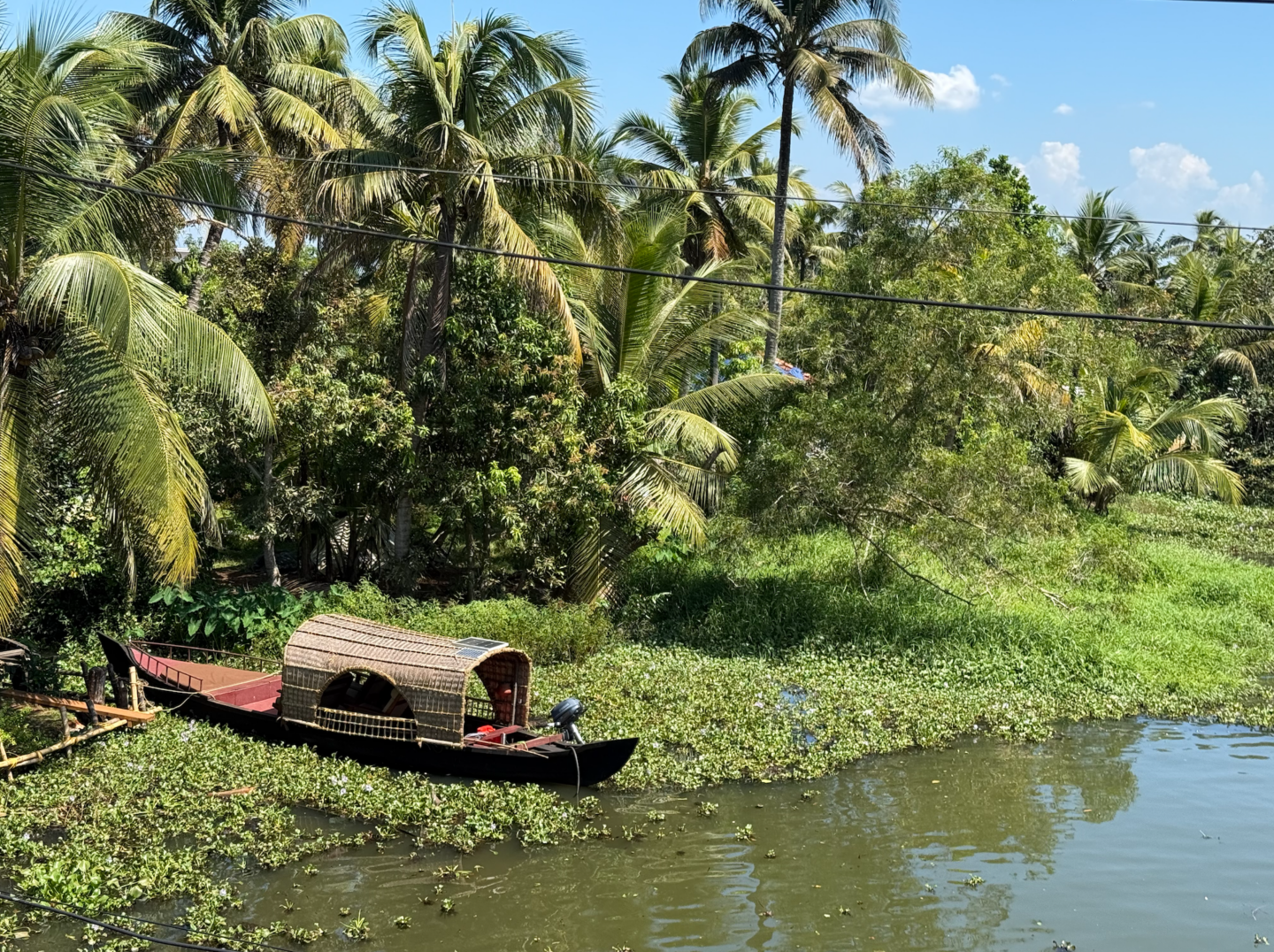
I spent 3 nights and 4 days in Kumarakom, a small town set along Vembanad Lake, which is the largest lake in the state. While the lake stretches to the beautiful town of Alleppey on the other side, it is said that Kumarakom is the less chaotic side, and feels like a good introduction to the backwaters if you’re not looking for anything too crowded.
Getting here is fairly straightforward. The nearest airport is in Kochi (Cochin International Airport). From there, you can drive down (about 1.5–2 hours or 50 kms), take a train to Kottayam, and then a short cab ride, or just do what I did: rent a car and drive from the airport. The roads are good, and it actually adds to the whole “slow travel” feel of the trip.
Side Note: I landed at the Airport at 10 PM and spent the night at Diana Heights in Kochi – it was a budget-friendly hotel that was clean and comfortable for one night, but could do with a bit better maintenance. The next morning, we drove down the road to Saravana Bhavan for our first South Indian breakfast of mendu vada, dosa and filter coffee before beginning our drive to Kumarakom.
You don’t need a long itinerary here. Two nights are usually enough to experience the backwaters at a relaxed pace. But if you have more time, Kumarakom works well as a base to just stay put or explore nearby areas without rushing.
FUN THINGS TO DO IN KUMARAKOM
Drive or Ride Around To Get A Feel Of The Place
This is one of my go-to things in any new place, and Kumarakom does not disappoint.
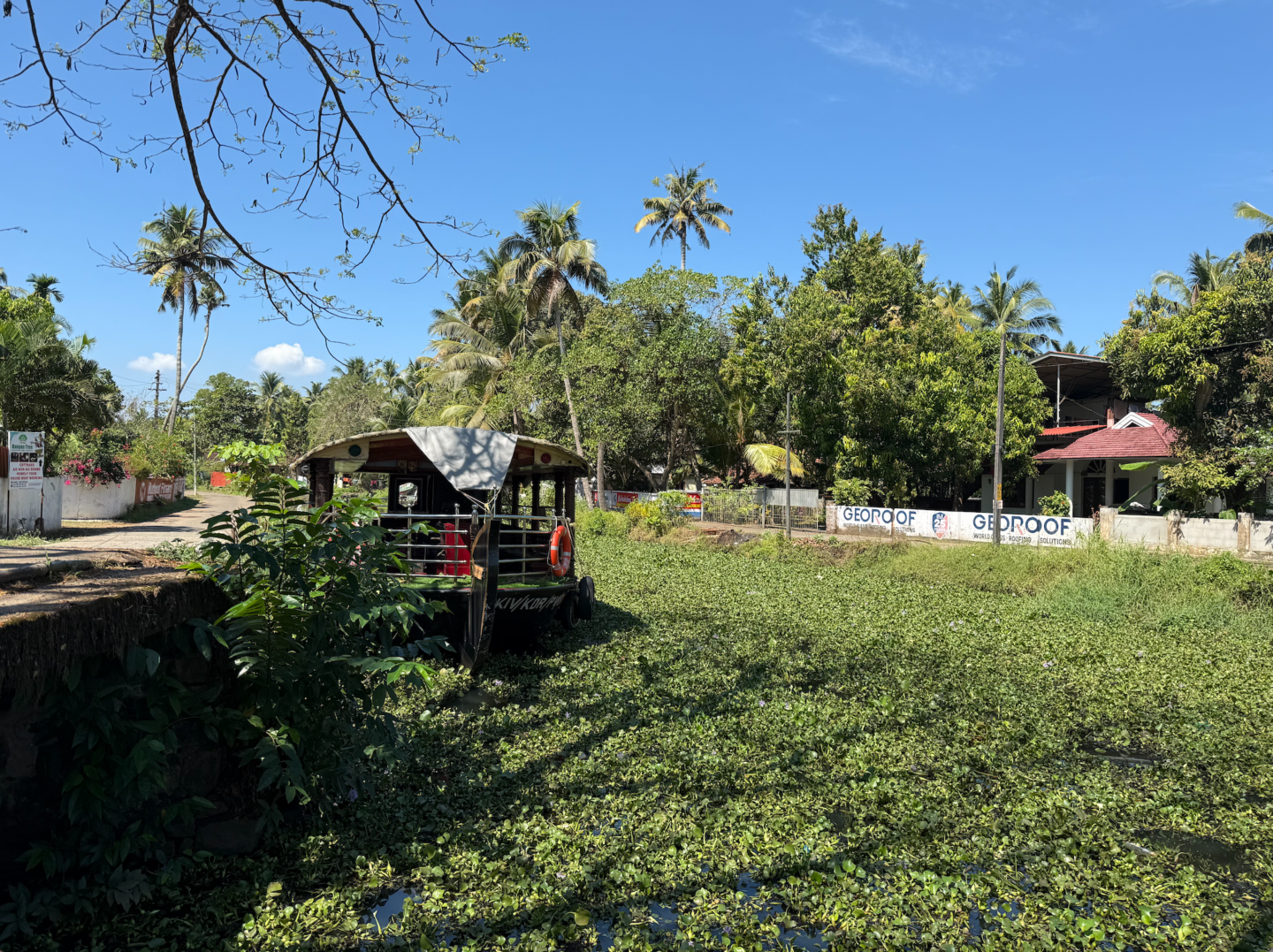
Skip the main roads for a bit. They’ll mostly give you hotels, restaurants, and the usual tourist-facing version of a destination. The real charm is in the smaller lanes – the ones that branch off unexpectedly, run alongside canals, or lead you under low bridges with barely any traffic.
That’s where you start to see how people actually live.
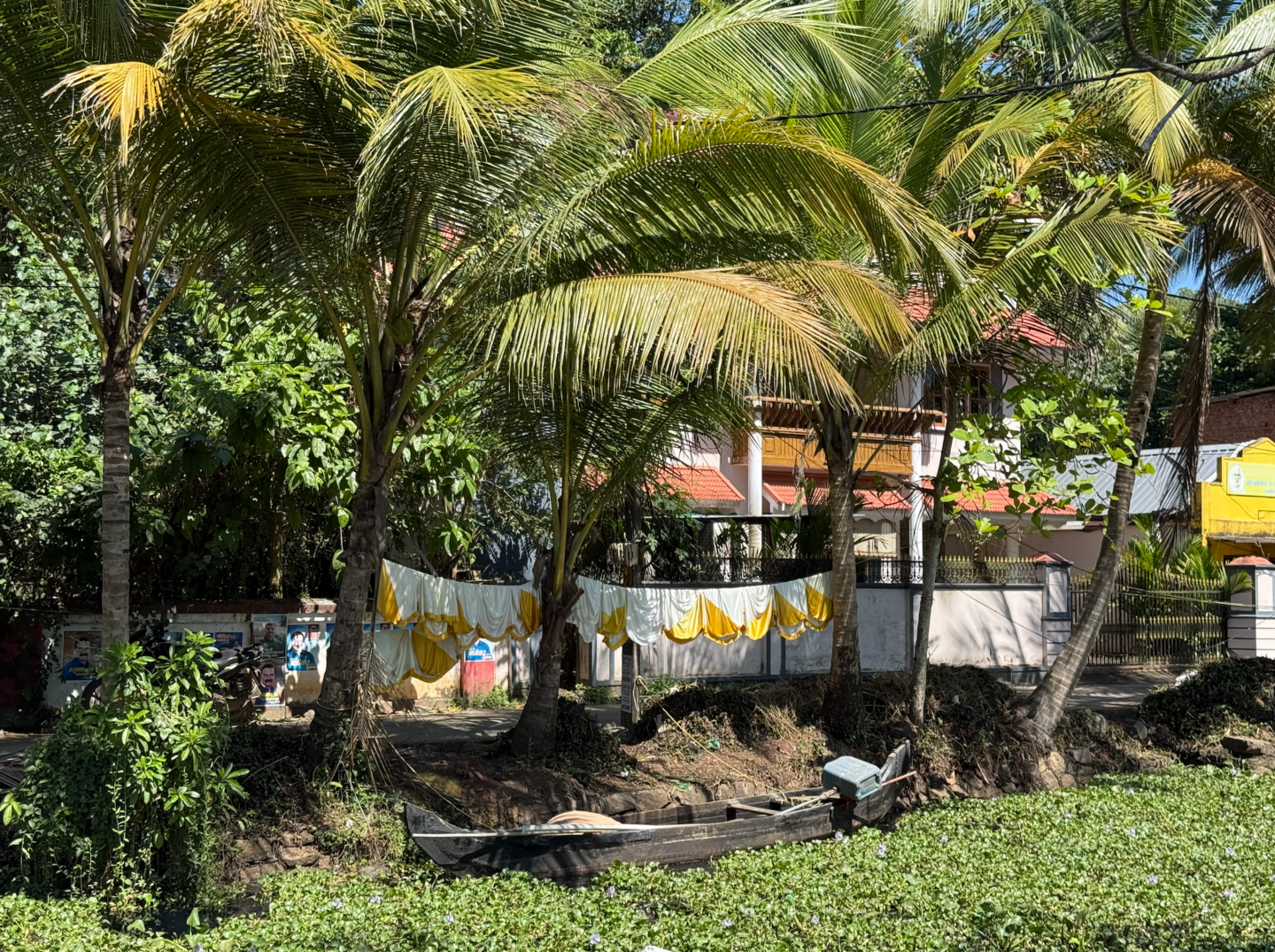
I spent a good amount of time just driving around, occasionally stopping, sometimes walking when something caught my eye. You’ll notice details you wouldn’t otherwise – homes right by the water with a coconut tree bark across it acting as a bridge to the home, locals going about their day, and these massive mansions. And then you remember – Kerala + Gulf money is a very real combination. Almost every family seems to have someone working abroad, and it shows. One house is somehow bigger (and shinier) than the next.
It’s not an “activity” in the traditional sense, but it’s probably one of the easiest ways to feel connected to the place beyond just passing through it.
Go on a houseboat tour or shikara ride
You really can’t come to Kumarakom and not do this.
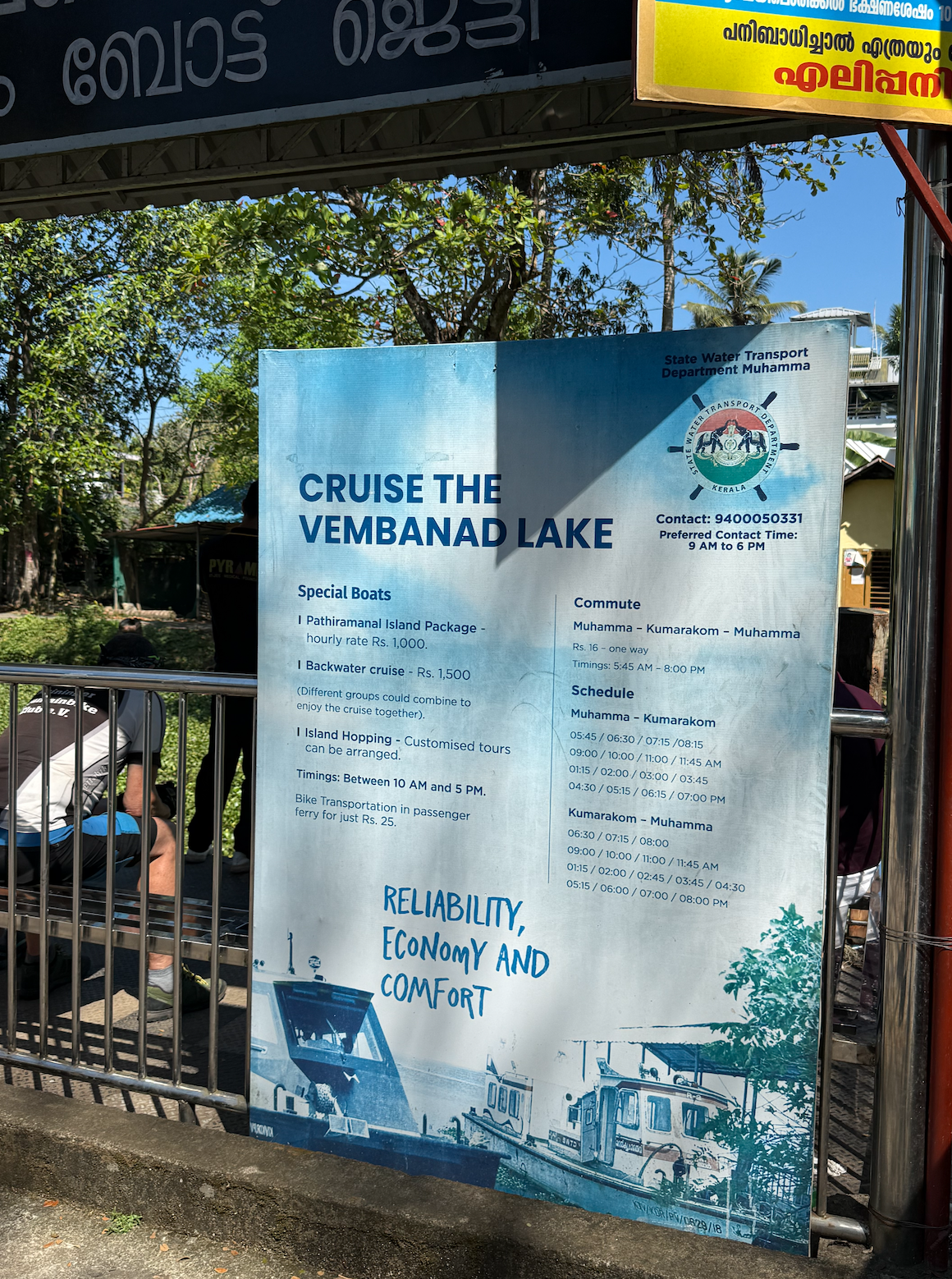
I’ve already gone into full detail in my houseboat blog, but here’s the short version: whether you’re travelling solo, as a couple, with family, or even in a larger group – there’s a boat for you. Houseboats can accommodate quite a few people, and you can pick anything from a few-hour cruise (I did a sunset one), to a full day, overnight, or even multi-day experience.
Now, if I had to do it again, I’d aim for an early morning slot. That’s when the backwaters are at their prettiest, especially with stretches of pink lotuses in bloom. I missed this (still slightly annoyed about it), but it’s worth planning for. By the way, our driver let me steer the boat for a little while!
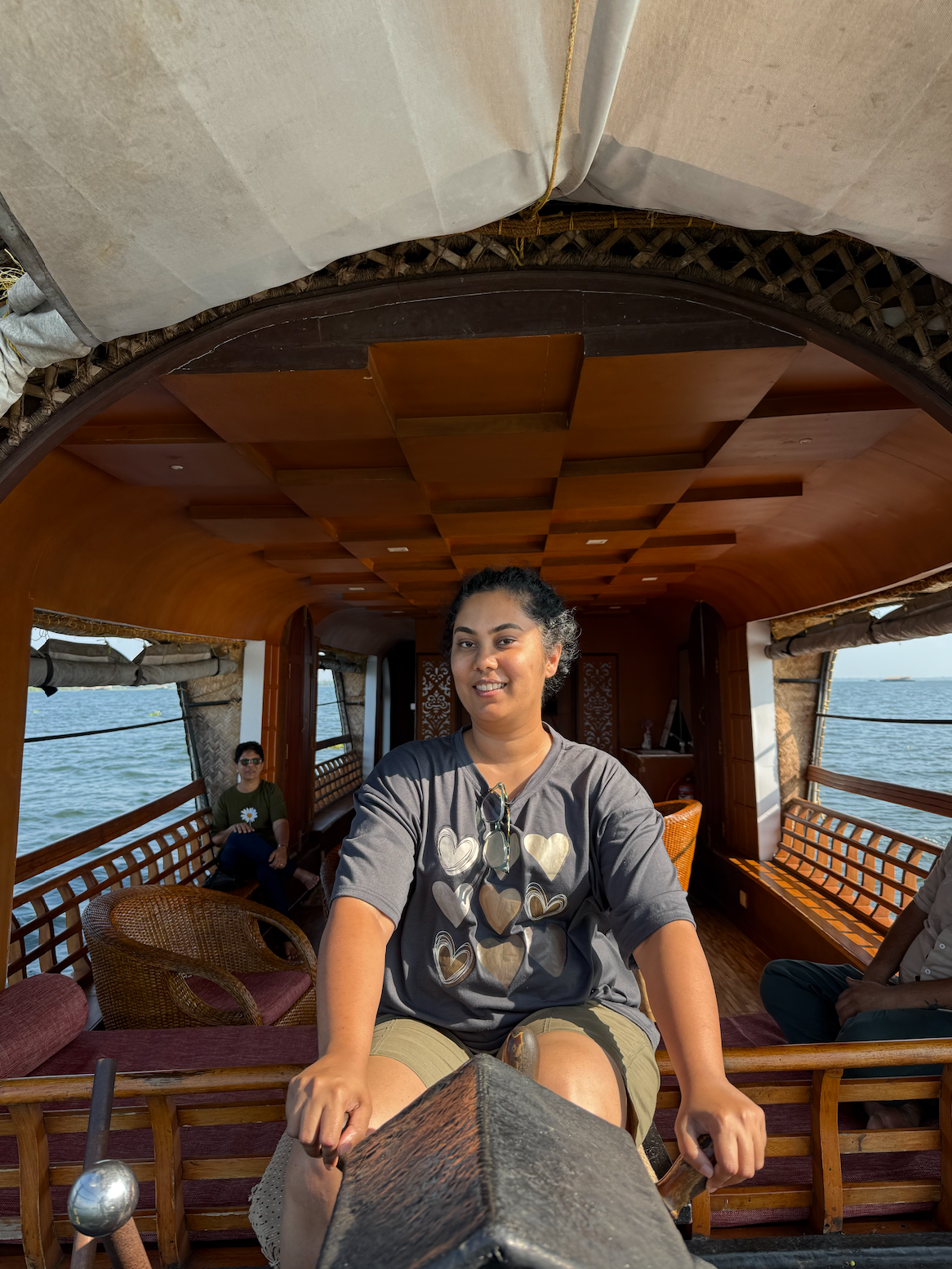
There are a lot of houseboats here – easily in the thousands – and while they’re undeniably beautiful, they’re also on the larger side. Which means they mostly stick to the wider, more popular routes. If you want something quieter and a bit more intimate, look at a shikara ride instead. or go in a smaller (1 bedroom) houseboat as opposed to a 2,3,4 and even up to a 14 bedroom houseboat. These are smaller, traditional wooden boats (usually for 6–8 people) that can take you into narrower canals and less crowded parts of the backwaters. Also, a lot more eco-friendly.
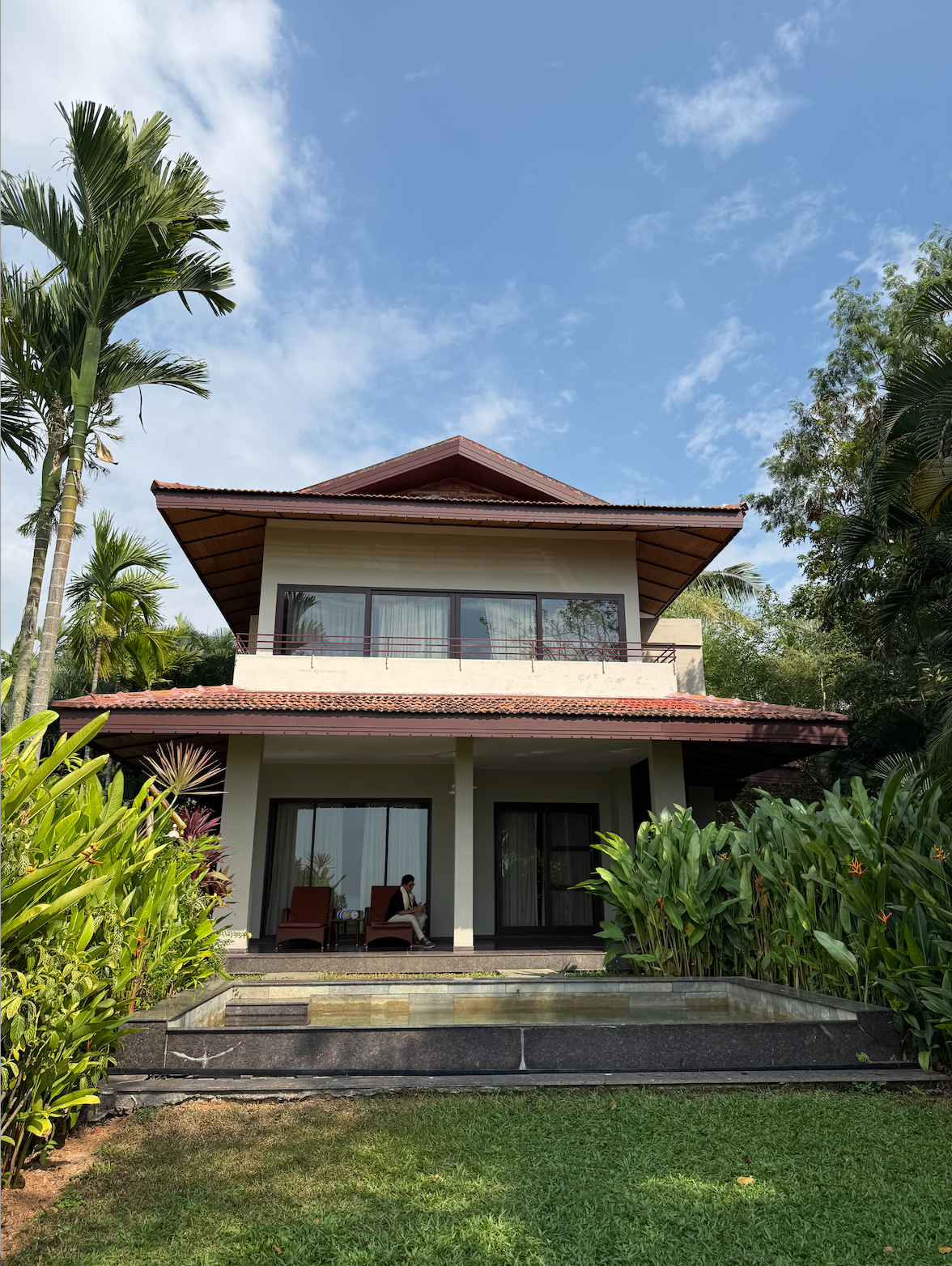
Unwind at a Lakeside Stay
Visit a toddy shop
Toddy shops in Kerala aren’t just places to drink — they’re a whole culture. They’re an institution.
If you’re curious about how locals really unwind, step into one of these no-frills, slightly chaotic, completely authentic spots. Toddy itself is a mildly alcoholic drink (around 4–6%), tapped fresh from coconut palms. You’ll sometimes hear it called kallu, especially when it’s a bit more fermented and sour.
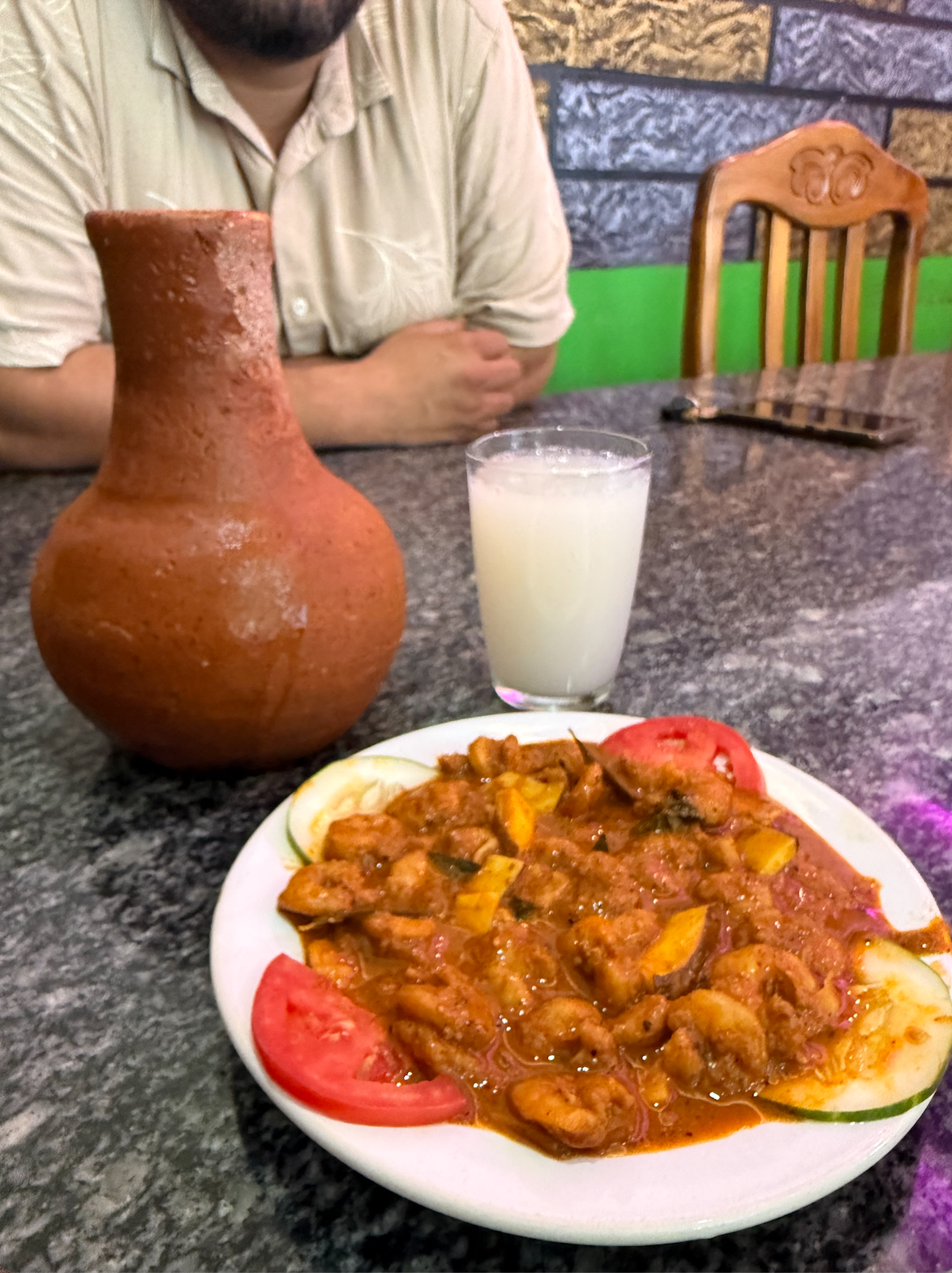
Most toddy shops are exactly how you’d imagine. They’re simple wooden structures, surrounded by greenery, with plastic chairs, steel plates, and absolutely no interest in being fancy. Menus, if they exist, are often just told to you verbally.
But the real reason to go? The food. And I’ll say this confidently – some of the best seafood in Kerala is found in places like this, not in high-end restaurants. You’ll find spicy fish curry, prawns, fried fish, and boiled tapioca on the side. If you like your food spicy, you’ll be very happy here.
View this post on Instagram
We stopped at Kilikkoodu Toddy Shop which was more out of convenience than planning, since we had some time to kill before our houseboat ride. I didn’t get to try as much as I wanted (which I regret), but what we did have – prawns and fish in a spicy gravy. One small thing to note: seating can be a bit segmented. Groups of men usually sit together in one section, while women or families are guided to a more separate area. It’s just how these places function.
Admiring the Vembanad Lake
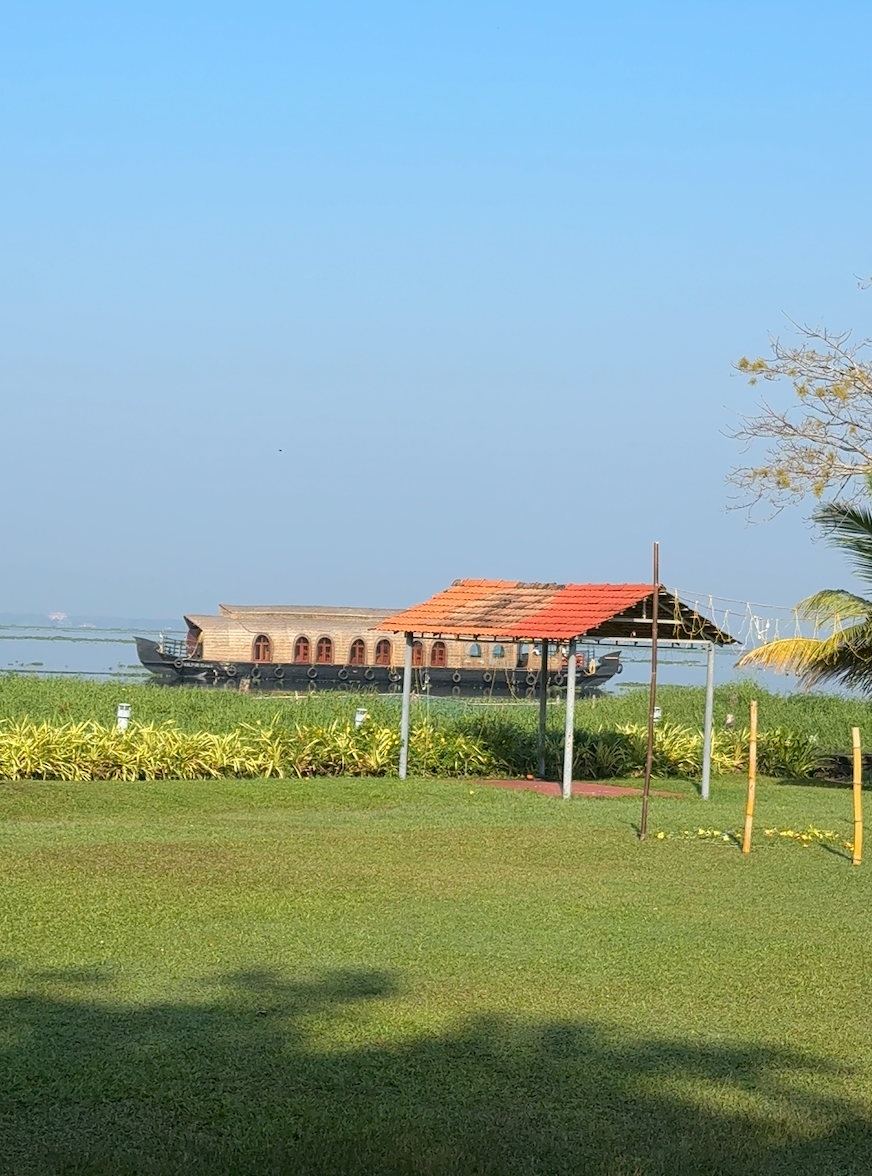
A lot of Kumarakom quietly revolves around Vembanad Lake, and once you’re there, it’s easy to see why. It’s not just the largest lake in Kerala, but also the longest in India, and it has this way of constantly shifting depending on the time of day. There are plenty of little vantage points around Kumarakom where you can just stop, stand still for a bit, and watch houseboats drift by in the distance, which, yes, makes for great photos, but also just feels… calming.
If you’re into birdwatching (or even mildly interested), this is your spot. The lake is full of birdlife, and you’ll keep noticing something new if you stay long enough, especially early morning or closer to sunset. We were lucky with where we stayed, Niraamaya Retreats Backwaters & Beyond Kumarakom sits right on the lake, literally meters from our room.
And that meant we didn’t have to “go” anywhere to experience it. For three days, we just kept coming back to the same view, watching the sky change colour over the water, from soft mornings to dramatic sunsets.
Go on a village tour
This is something our hotel kept recommending. They even offered to organise a guided village tour for us. We ended up skipping it. Mostly because, coming from Goa, a lot of it felt familiar. The red-tiled homes, coconut trees, fishing, farming, and even toddy tapping (which, like in Goa, is slowly fading out). There’s a shared coastal rhythm that overlaps more than you’d expect. It’s pretty similar to life in Goa, minus the backwaters.
But that said, if you’re not from this part of the country, I can see why this would be genuinely interesting. Kumarakom’s villages aren’t just “rural India” – they’re shaped by the backwaters. Life here literally moves with the water. Boats replace roads in some parts, daily routines revolve around canals, and everything feels a little more… fluid.
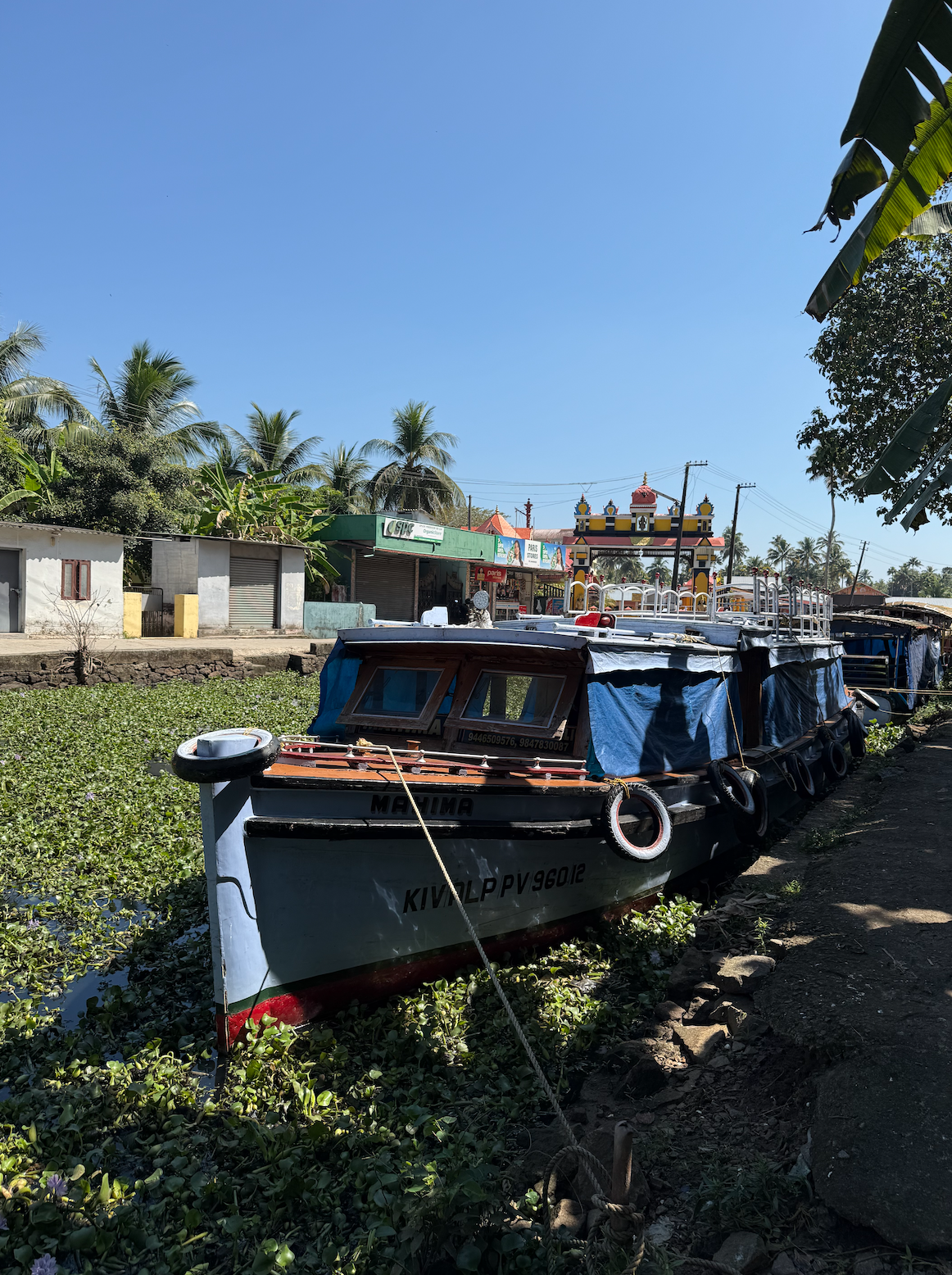
A guided tour would give you context you might otherwise miss: how people live, work, commute, and adapt to this landscape. So while we chose to skip it this time, I wouldn’t write it off. It just depends on how new this kind of setting is to you.
Other Things to Do (If You Have the Time)
If you have a little extra time in Kumarakom, there’s plenty you can add in without overplanning your days. You could spend a quiet morning at the Kumarakom Bird Sanctuary, especially if you enjoy birdlife, or try an Ayurvedic massage. Kerala being the home of Ayurveda, means you’ll find good practitioners almost everywhere, including most resorts. Many places also offer yoga sessions by the water, which feels very fitting here, even if you’re not usually into it.
If you’re up for something a bit more active, cycling through the smaller village roads or taking a canoe into the narrower canals gives you a different perspective from the houseboats. And honestly, one of the best things you can do here is nothing at all, just sit by the lake, take it slow, and let the place do its thing. I didn’t have the time to do any of these things since we went visiting Mum’s friends who lived hours away from Kumarakom, which occupied one full day of my 3 days here.
I think Kumarakom is one of those places where if you try too hard to “do it right,” you’ll miss the point a little. There are things to do, yes, but not in that structured, tick-box way. I’ve you been to Kumarakom, what were some of the things you enjoyed doing?
Follow me on Instagram and Facebook for more travel! If you’re travelling to Varkala, Kochi, or Munnar, check out my other blog posts! Oooh, and posts on Rishikesh in Uttarakhand coming up next…
