
I’ve written extensively about Goa’s best Indian restaurants, South Indian restaurants, the top Pan Asian spots (which, honestly, open and shut faster than I can keep up with), the nicest chaat places, and even where to get your gelato fix. In fact, there are countless listicles like these on my Goa food blog. At this point, it’s safe to say I clearly enjoy making a good list.
So, naturally, this one was coming.
Over the last year or so, I’ve been travelling quite a bit through the North East — Arunachal Pradesh, Meghalaya and it’s capital of Shillong, as well as Sikkim – and if there’s one thing that really stayed with me (apart from the landscapes), it’s the food. It’s nothing like what we typically think of as “Indian food.” It’s lighter, cleaner, less oily, and far more ingredient-forward. Simple broths that somehow carry a ton of flavour, smoked meats, fermented elements like fermented fish that add depth without being overpowering, and dishes that rely more on technique and produce than heavy masalas. There’s the strong smell and flavour of bamboo shoot that can take some. getting used to – and the famous bhoot jalokia, the spiciest chillies in the world.
North East Indian food the kind that you don’t always fully understand on the first bite, but it grows on you quickly.
And while Goa isn’t exactly known for North Eastern cuisine, there are a few places that are doing it really well. Some more authentic, some slightly adapted, but all worth knowing about. The best ones usually have North Easterners as customers, so you know they’re the real deal.
So, let’s get into it.
NORTH EAST INDIAN FOOD IN GOA
Soul Chef, Caranzalem
If there’s one place that really anchors this list, it’s Soul Chef.
It’s actually not new at all.. a lot of people discovered it back when it was tucked away in Mala, Panjim, but if you haven’t been yet and you’re even remotely curious about North Eastern food, this is your sign to go. It’s the kind of place where once you sit down, you realise you’re in good hands.
What stood out to me immediately was how involved the owners are, at least on the day I happened to walk in, unannounced. If you’re unsure what to order (which, let’s be honest, most of us are with this cuisine), they’ll walk you through it: flavours, ingredients, what’s mild, what’s got that fermented kick, all without making it feel like a lecture or pushiness.
The food is uncomplicated but packed with flavour. The pork ribs in black sesame are easily a standout, rich and nutty… not something you come across often in Goa. The pork momos are solid, the street-style noodles hit that comforting spot, and I didn’t expect to say this, but the black sesame ice cream is a must. Slightly earthy, slightly nutty… it just works.
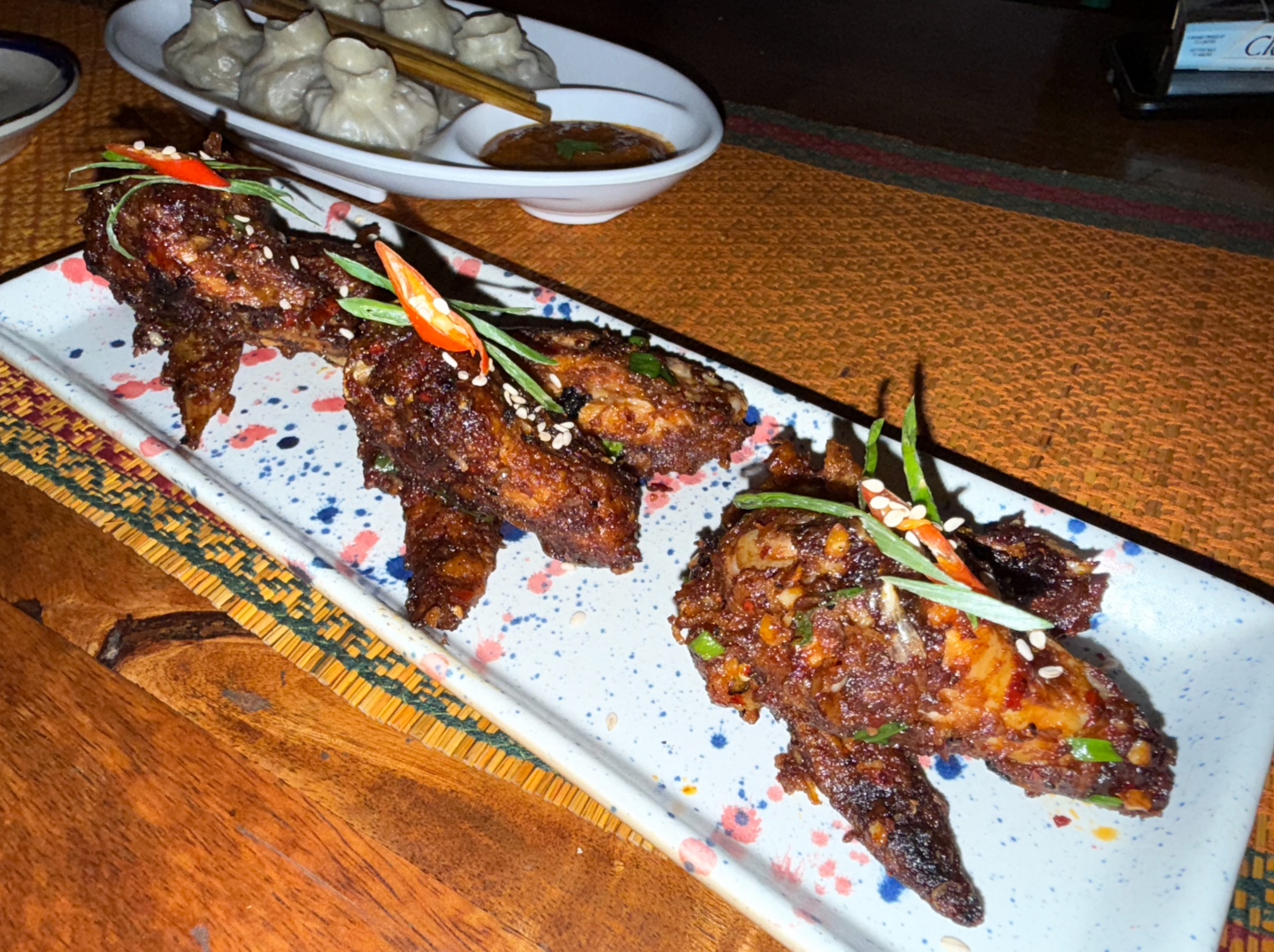
There’s still a lot on my list for next time… things like black sesame rice, thukpa, chilli chicken, Laai Gaahori, aloo pitika. And if you enjoy that distinct bamboo shoot flavour (you’ll know if you do), there’s quite a bit here for you. The new space in Caranzalem is also worth mentioning. It’s somewhere between homely and minimal without trying too hard. I never went to the old Mala location, so I can’t compare, but this one feels like a place you can settle into for a long, slow meal.
We paid somewhere around ₹5,500 for about 5–6 dishes and a couple of drinks for 3 of us (with only.2 drinkers among us). I might be slightly off, but considering how niche and authentic the food is, it felt fair.
Meiphung, Candolim
I’ve been going to Meiphung for years and I’d been enjoying their food right from the time they were at their previous location along Baga Creek. This was my first introduction to the cuisine, way before I started travelling India, and in fact, I wouldn’t be surprised if no other North East Indian restaurant apart from Meiphung existed back then. Now, they’re at a blink-and-you-miss-it ‘gully’ behind a building on the busy Calangute road. Run by a Naga chef and his wife, the food here is a little more rooted, slightly more traditional, and a bit more unapologetic.
The space itself leans into that identity. You’ll notice Naga-inspired elements, wood, and a slightly rustic feel that ties back to the idea of a “hearth” (which is literally what Meiphung means). The food is where it gets interesting, and also where I’d say you need to go in with the right expectations. The food here is true to its roots, meaning smoked meats, bamboo shoot, fermented flavours, and a level of spice that can catch you off guard.
The smoked pork here is something people keep going back for — and for good reason. It’s bold, slightly funky (in a good way), and very different from anything you’ll usually eat in Goa. Dishes with bamboo shoot and king chilli also show up a lot, so if you enjoy those flavours, you’ll have a good time here. I love their crispy fried mussels served in the shell and topped with fried onions. They also do the more familiar things like momos, noodles and fried rice — so you can balance your meal if you’re easing into it. And if you’re feeling a little adventurous, try the rice beer (in case I didn’t mention it, Soul Chef also offers rice beer).
While some people absolutely love the authenticity and flavours, others may expect a more “restaurant-style” version of the cuisine and don’t always get that. So I’d say go here when you’re in the mood to explore, not when you’re looking for something safe or predictable.
MORE NORTH EAST FOOD
I still have a couple of other North East Indian Restaurants and Naga Restaurants to try. You can count the number of authentic Naga restaurants on one hand, and there are many that offer North East Indian food as a small subsection of their menu. You’ll also find some that tweak the food to cater to tourists’ palates.
