
Ok, this one has been a long time coming because scuba diving in Goa is one of those experiences that looks almost too easy to book.
Just search Google and you’ll find packages for ₹1,500, ₹2,000, ₹3,000 and ₹7,000+. You’ll find photographs of people floating over coral reefs, grinning divers posing beside shipwrecks and promises of turtles, colourful fish and an unforgettable underwater adventure.
And then you’ll find reviews from people who paid for “scuba diving” and spent more time on a crowded boat than underwater.
So what’s real and trustworthy… where should you spend your money?
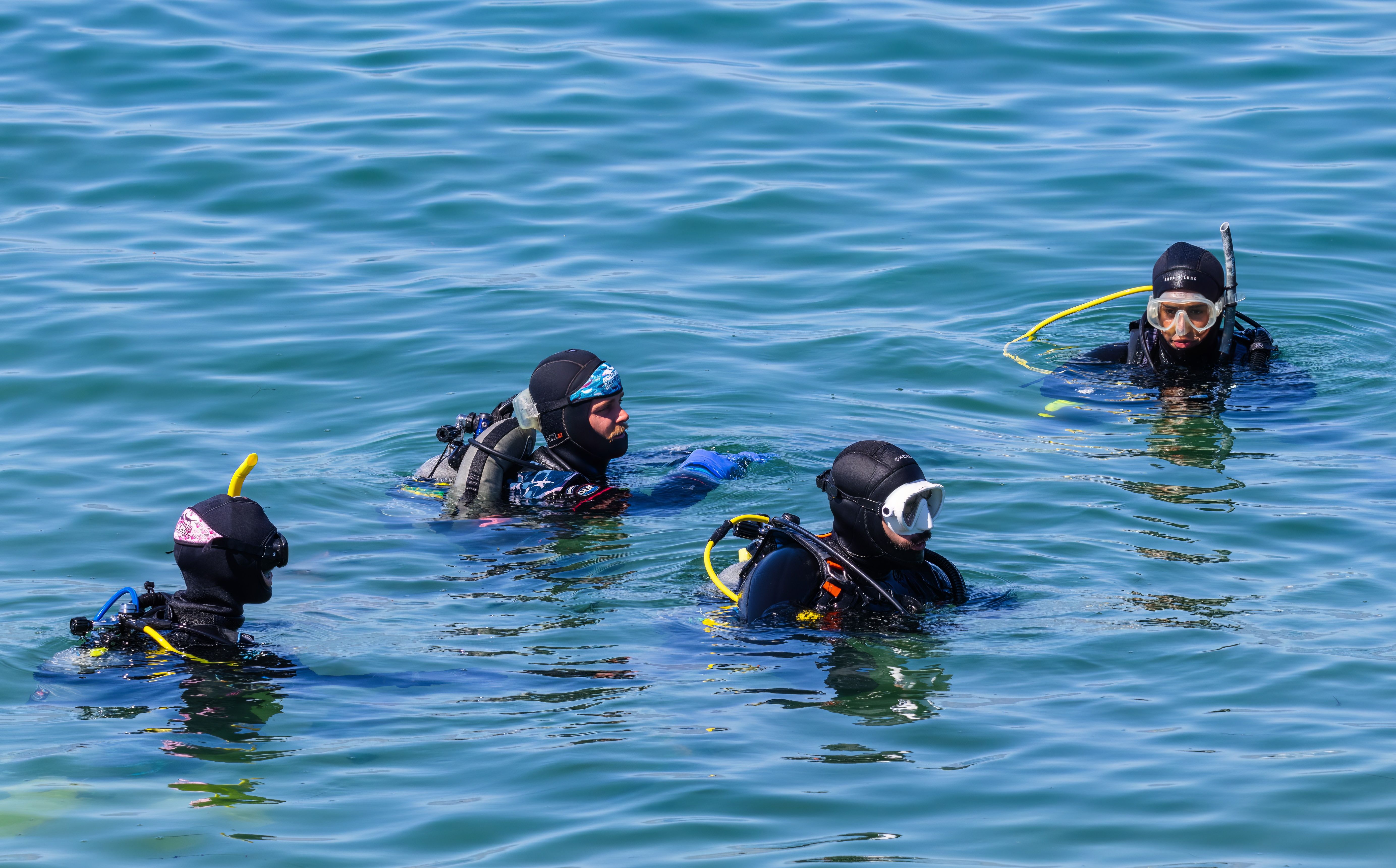
Is it worth going scuba diving in Goa?
I’d say it is. But I wouldn’t book the cheapest package I could find.
I’ve lived in Goa long enough to know that there is often a big difference between something being cheap and something being good value. And scuba diving is one activity where saving a few thousand bucks would definitely teach you the difference between cheap and value… the hard way.
Here’s what you actually need to know before booking scuba diving in Goa.
So to answer your question…yes, it is worth scuba diving in Goa especially if you’re a first-time diver — but choose your operator carefully.
Goa isn’t the Maldives, the Great Barrier Reef or the Andamans and visibility can vary considerably. Our underwater landscape here isn’t going to compete with world-famous diving destinations. And you shouldn’t book a dive expecting a guaranteed turtle or a National Geographic-worthy reef.
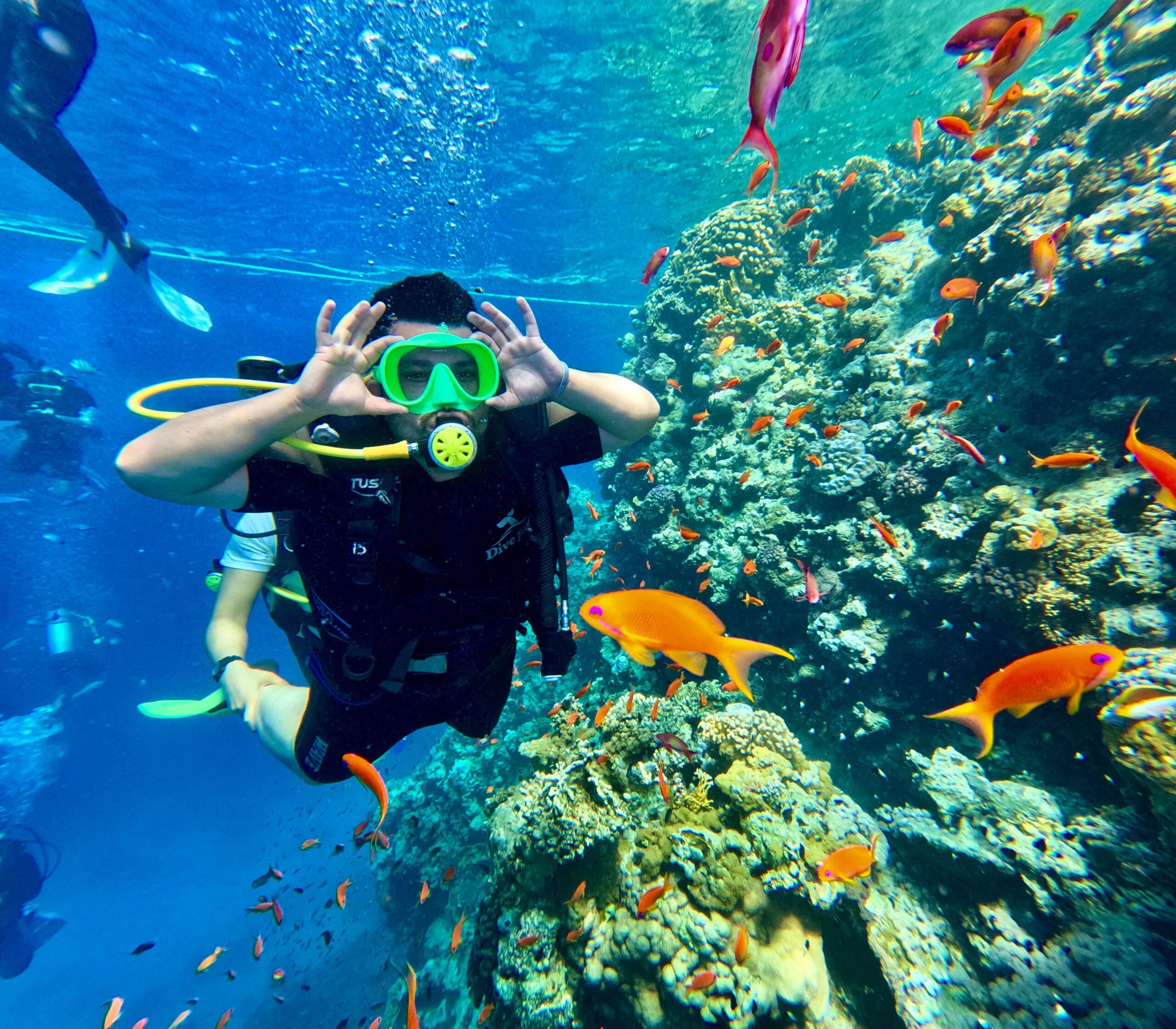
But Goa has established dive sites around Grande Island, Bat Island and Suwadik Reef, including coral reefs, rocky formations and a historic shipwreck. Marine life can include reef fish, rays and turtles.
More importantly, Goa can be a very approachable place to learn scuba diving before committing to more expensive diving destinations. And that, to me, is one of its biggest advantages.
You can learn how to breathe underwater, use your equipment, equalise your ears, communicate with an instructor and get comfortable in the ocean here at a much more affordable rate than in other countries… and then take those skills to the Andamans, Lakshadweep, the Maldives or wherever your diving takes you next, so you’re not spending big bucks on the basics, but to enjoy every minute underwater in places that offer a far better underwater experience.
Where can you go scuba diving in Goa?
When people think of scuba diving in Goa, they often imagine jumping into the sea directly from one of Goa’s famous beaches.
That’s not really how the better-known diving experiences work.
The main diving happens offshore, around islands and reefs. The name you’ll encounter most often is Grande Island, also known as Ilha Grande, in the waters off South Goa. Other sites associated with Goa diving include Bat Island and Suwadik Reef.
Grande Island is particularly popular because of its combination of reef diving and wreck diving, and this is where things get interesting for a beginner becayse you aren’t simply being taken out into the middle of the Arabian Sea and dropped into an abyss. Many of the commonly used Grande Island sites are relatively shallow.. to give you an estimte, it is around 6-10 metres. So basically, shallow enough to make Goa suitable for training. Other beginner programmes go down to around 12 metres, which is quite deep for a beginner or learner.
Grande Island scuba diving: What is there to see?
If you search for Grande Island scuba diving, you’ll see one attraction mentioned again and again: the shipwreck. The wreck is a British-era wreck that has become part of the underwater ecosystem, with coral and marine life around it. It sits at around 40 feet, or roughly 12 metres, and it is now covered with soft coral and fish.
Depending on the dive site and conditions, you may encounter:
- Coral
- Reef fish
- Parrotfish
- Angelfish
- Snappers
- Moray eels
- Groupers
- Stingrays
- Turtles
- Schools of tropical fish
- The shipwreck itself
But here’s something I want to stress: Don’t book your dive because someone promised you a turtle.
You might see one. You might see zero. You might see a stingray instead. Or a moray eel. Or a huge school of tiny fish moving together like one organism. Wildlife doesn’t work like a restaurant menu – and if someone promises that you’ll see something, they’re lying. If you’ve been on a lion safari like the one in Gir National Park, you’ll know what I mean.
How deep do you go scuba diving in Goa?
For a beginner experience around Grande Island, you’re generally going. to dive at relatively shallow depths, with some providers offering to go around 12 metres while others go to 6-10 metres.
For a first time diver, tha’s more than enough. Don’t focus on deep dives when you’re doing your first few dives. Think about everything your brain is processing: You’re breathing underwater. You’re wearing several kilograms of unfamiliar equipment. You’re learning to control your buoyancy. You’re equalising the pressure in your ears. You’re communicating with hand signals. You’re looking at fish. You’re trying not to accidentally kick the person beside you.
You don’t need to add a 30-metre wall dive to that list. That’s a good reason why Goa makes sense as a learning destination.
Why I think Goa is a good place to learn scuba diving
There are diving destinations where I’d rather arrive as an experienced diver.
The Great Barrier Reef is a good example.
Imagine spending a fortune travelling to a world-famous diving destination and then spending half your dive thinking:
Am I breathing properly?
Why is my mask filling with water?
What does that gauge mean?
How do I control my buoyancy?
Why can’t I stop floating upwards?
I’d rather learn all that close to home and dive like a pro when I need the experience! Goa offers relatively shallow dive sites, established diving schools and access to proper beginner programmes.
Goa doesn’t pretend to be the world’s greatest dive destination to be a good place to learn scuba diving. You can learn here, decide whether you actually enjoy it and then spend your money on more spectacular dive destinations once you’re comfortable underwater.
Scuba diving in Goa price: Why are some packages ₹1,500 and others ₹7,000?
This is probably the biggest question people ask me when researching scuba diving in Goa.
Why can one website advertise scuba diving for ₹1,500 while another charges ₹5,000, ₹7,000 or more?
That’s because you’re not necessarily buying the same thing. This is where I would stop comparing the price and start comparing what you’re actually getting.
You may encounter packages around ₹1,500–₹2,000 that bundle scuba with a number of other water sports.
Some cheap experiences involve crowded boats, little or no meaningful training, long waits, very short underwater sessions, extremely shallow dives and overall, a different experience from what you thought you had booked
That doesn’t mean every ₹1,500 package is automatically bad. It means you need to ask exactly what you’re getting. Because if you spend an hour and a half travelling to the dive location, only to get 5–8 minutes underwater at less than two metres, you may have saved ₹5,000 and still have wasted the entire day.
As the saying I recently learned goes: “Itna mein itna-ich milega.” To translate, for that price, this is what you get. And that’s fair.
If your goal is simply to say, “I did scuba diving in Goa,” and you don’t mind a basic experience, you may decide that the cheapest package is sufficient.
But if you’re genuinely excited about scuba diving? Do your research, ask the right questions and pay the correct price.
And don’t let the photographs sell you the package. A website covered in crystal-clear underwater photographs doesn’t necessarily mean that’s what your dive will look like. Goa’s visibility changes with season, weather and sea conditions – and some booking agents use generic underwater imagery rather than photographs from the exact experience they’re selling.
What does a proper scuba-diving experience cost?
Here’s a benchmark I can share with you. A one-day experience is around ₹7000 which includes
- Filling out a waiver
- Wetsuit provided by the school
- Scuba equipment
- Patient instructors
- Learning how the equipment works
- Learning underwater communication
- Building confidence before the actual dive
- Boat transfer to the island
- Two dives of approximately 40–45 minutes each
- Snacks
- A buffet meal at a hotel
- A strong sense of safety
Now as you can see, that’s a very different product from a five-minute underwater dip.
So when someone asks me: “Is ₹7,000 too much for scuba diving in Goa?”
Not necessarily. If you’re getting proper training and two substantial dives, it’s a completely different experience from a ₹1,500 package. I’d rather pay ₹7,000 for a good day underwater than ₹2,000 for a terrible experience that makes me never want to scuba dive again.
How long is the boat ride to Grande Island?
This is another thing that you should be clear about. You have to get there.. to Grande Island. Depending on the operator and departure point, the boat journey can take a significant amount of time. It can take anywhere from half an hour to over an hour. The exact duration depends on the route, departure point, boat and conditions.
So don’t obsess over the number. Just understand that the boat journey is part of the day. Just keep your eyes open while you’re out there…you may even spot dolphins on the way!
What happens during a proper beginner scuba experience?
If you’ve never dived before, the equipment can look like something designed for a very complicated science experiment.
There’s the tank, the regulator, gauges, buoyancy control device, mask, fins, wetsuit… I don’t know if I’m missing any more. Og yes, also about 17 tubes that go somewhere or the other lol! That’s exactly why training matters – a proper beginner experience starts on land.
The process also includes filling out a waiver, changing into the wetsuit provided by the school and meeting your instructor. The instructor teaches you how the equipment works, how to use it, how to communicate underwater and, importantly, helps you build confidence before you head into open water.
The pool/confined-water training is not a pointless formality. It’s where you get to discover: “Oh. I can actually breathe through this thing.” Once you’re comfortable, you head by boat towards the dive site. Then comes the slightly terrifying bit where you enter the water. Depending on the boat and entry method, that can involve the classic backward roll into the sea.
Can beginners scuba dive in Goa?
Yes. You do not need to be a certified diver to try scuba diving in Goa. Introductory programs are specifically designed for first-timers, and they are open to non-swimmers, subject to the programme’s requirements and medical screening.
That said, there is an important difference between “I can’t swim very well.” and “I am completely uncomfortable in water.”
Tell the instructor honestly where you stand so that the instructor knows your actual ability so they can decide what is appropriate to keep you safe.
Can non-swimmers scuba dive in Goa?
This is a question I get a lot. And the answer is more complex than “yes” or “no.”
Some introductory programmes accommodate people who aren’t strong swimmers. In fact, many non-swimmers say they were able to complete the experience with patient instructors.
But you should still be comfortable being in the water and follow the dive centre’s requirements.
And tell them the truth. If you panic in water, if you cannot swim, say so. if you’re frightened, say so. A good instructor would much rather know than discover it halfway through the dive.
Do you need a scuba certification to dive in Goa?
No, not for a beginner/introductory experience. You can try scuba diving without becoming a certified diver first.But if you love it, you can take the next step and become certified. That’s where the price changes dramatically.
One-day scuba experience vs scuba certification
There’s a big difference between trying scuba diving and becoming a diver.
A one-day experience teaches you enough to participate in a supervised introductory dive. While a certification course is designed to teach you the skills and knowledge required to become a certified recreational diver.
I’m sharing estimaes again here – but an Open Water Diver certification is around ₹29,990 before tax, while a three or four -day certification course puts the cost at ₹35,000, with an additional specialisation course included. Always confirm the current price and course structure directly with the operator before booking.
Like I said above, the advantage of doing this in Goa is that you can learn the basics here and take your certification with you to other dive destinations. Once certified, you’ll be able to dive within the limits of your training and certification, typically with a buddy rather than needing an instructor to accompany you on every dive.
How to spot a bad scuba-diving package in Goa
This is the section I wish more Goa travel websites had. Because the problem isn’t that every cheap scuba package is bad.
The problem is that the word “scuba” gets used to describe wildly different experiences.
Here are some red flags to watch for.
You aren’t given any meaningful training
If you’re a complete beginner and the operator wants to take you straight into the sea without teaching you how the equipment works, run!
They won’t tell you how long you’ll actually dive
If they say it’s a six-hour experience, that means nothing. Ask: “How many minutes will I actually spend underwater?”
They won’t tell you the depth
Ask where you’ll dive and approximately how deep.
The boat is packed
A large boat isn’t automatically unsafe, but if your scuba experience involves huge numbers of people, long waits and everyone taking turns with the same activity, you need to question what you’re paying for.
You’re sharing equipment
A proper operator should be able to explain their equipment and hygiene procedures clearly.
They can’t tell you who the actual dive operator is
This is a major one. If you’re booking through an agent, ask: “Which dive centre will actually conduct my dive?” Then research that company. There are many fly by night operators that can operate under the radar and be caught only when an untoward incident occurs.. Be wary of them.
They promise everything
Scuba + parasailing + jet ski + banana boat + dolphin spotting + lunch + island trip + photos + “full day adventure” for ₹1,500. At some point, please ask yourself how much actual scuba diving can possibly fit into that price.
They don’t care about your experience
A responsible dive operation should want to know whether you’re a beginner, whether you’ve dived before and whether there are any relevant medical concerns.
They’re more interested in getting you into the water than making you comfortable
This is perhaps the biggest red flag of all. You should never be pressured into diving because you’ve already paid.
What should a proper beginner scuba operator provide?
There isn’t one universal checklist that applies identically to every operator, but these are the things I’d look for:
Training – There should be meaningful instruction before a first open-water dive.
Qualified instructor – You should know who is taking you underwater.
Proper equipment – The operator should provide the necessary scuba equipment and explain how it works.
Clear dive duration – Know how much actual underwater time you’re buying.
Clear depth – Know the approximate depth of the experience.
Manageable groups – Ask how many people will be on the boat and how many divers are assigned to each instructor.
Weather policy – What happens if the sea isn’t suitable?
Transparent pricing – Find out whether food, transfers, photographs, videos and equipment are included.
Recent reviews – And don’t just read the five-star reviews. Read the three-star and one-star reviews too. That’s where you’ll find out how a company behaves when something goes wrong.
What is the best time for scuba diving in Goa?
The main scuba-diving season in Goa runs roughly from October to May.
The monsoon months of June to September bring rougher seas, rain and poorer visibility, and normal recreational diving operations are generally suspended or limited. In October, while the diving season begins again, conditions can still be transitional after the monsoon. Conditions generally become more settled in November.
Plan during the Dec-Feb window for your first dive, if you have the flexibility as this is the most favourable for visibility and calmer conditions. You can still dive from March to May, but conditions can become less predictable as the season progresses. And it goes without saying (I hope) – don’t plan any scuba diving between June-Sept.
What is the visibility like when scuba diving in Goa?
This is where you need to manage your expectations. Goa sits where the Mandovi and Zuari rivers meet the Arabian Sea, so visibility is never going to compete with Netrani or the Andamans – most operators put it at 3 to 10 metres depending on season, sometimes worse on a rough day. That’s just geography, and no amount of marketing changes it. You’ll find websites quoting visibility of 10–15 metres in good conditions, but even this can vary.
Both estimates are correct as visibility depends on. the weather, rainfall, sea conditions, currents, sediments, seasons, the particular dive site and the conditions on that particular day.
One expectation I’d like to set is that you shouldn’t book Goa expecting Maldives-blue water every single time.
PADI vs SSI: Does It Actually Matter Which One You Pick?
You’ll see both acronyms thrown around by operators here in Goa, and most guides either ignore the difference entirely or make it sound bigger than it is. To tell you the truth, for a beginner course in Goa, it barely matters.
Both PADI (Professional Association of Diving Instructors) and SSI (Scuba Schools International) are members of the World Recreational Scuba Training Council, which sets the baseline safety standards both agencies have to meet. Certifications from either are recognised at dive centres worldwide, neither expires, and you can switch between the two later – a PADI Open Water diver can go do an SSI Advanced course, and vice versa, with no issue.
Where they actually differ is in teaching style, not safety. PADI runs a fixed, standardised curriculum. Every PADI course looks basically the same wherever you take it, which some divers like for the consistency. SSI gives instructors more flexibility to adapt the pace and teaching style to the student, which can be useful if you’re a nervous beginner or short on time. PADI is the bigger global name with more dive centres worldwide; SSI has a reputation for slightly more affordable course materials and a more flexible learning path if you’re considering going further into diving as a hobby.
For a one-day try-dive or a first Open Water certification in Goa, don’t let the acronym decide the operator for you. Pick based on the actual signs of a properly run school – training, equipment, group size and more, not the three letters on their signage.
What should you eat before scuba diving?
Don’t turn up after a massive breakfast buffet and expect to feel fantastic while bouncing around on a boat. A light, easy-to-digest meal is generally a better idea. Eat a light meal around 1–2 hours before diving, stay hydrated and please alcohol before the dive (and if possible, the night before). No one wants to be on a boat with someone throwing up.
And please don’t arrive hungover. Sigh. Can’t believe this needs to be spelled out – but some domestic tourists and their alcohol – man!
ALSO! Don’t drink before diving. Alcohol can affect judgement, coordination and your ability to respond appropriately underwater. You want to be alert and capable of following instructions. If you’d like to go for a sundowner after the dive, here’s my list of sundowner bars beyond the usual ones – enjoy!
What should you ask a scuba operator before booking?
Feel free to copy and paste this list!
- Where exactly will we be diving?
- Is the dive at Grande Island?
- What is the approximate depth?
- How many minutes will I actually be underwater?
- How many dives are included?
- Is pool/confined-water training included?
- Will a qualified instructor accompany me underwater?
- How many divers are assigned to each instructor?
- Is all scuba equipment included?
- Is a wetsuit included?
- Are photos and videos included?
- Is boat transfer included?
- Are meals/snacks included?
- Are there any additional charges?
- What happens if weather or sea conditions aren’t suitable?
- What is your cancellation/rescheduling policy?
- Who is the actual dive operator conducting the experience?
If the operator can’t answer these questions clearly – keep looking!
Are photos and videos included in scuba diving packages?
Often, yes – but don’t assume. Some operators include photographs and videos in certain packages.
But if someone tells you on the day of the dive that that photos are charged extra but you were told they were included when you booked? That’s a different matter. Ask before paying. And if they’re complimentary, get it confirmed via text or WhatsApp.
Is scuba diving in Goa safe?
No adventure activity is completely risk-free. But you can make a much better decision by choosing a qualified operator, following the instructor’s instructions and refusing to dive when conditions aren’t appropriate.
A proper operator should have:
- Trained instructors
- Appropriate equipment
- Safety briefings
- Medical/experience screening
- Weather and sea-condition protocols
- Clear emergency procedures
- A willingness to cancel or reschedule when conditions aren’t suitable
Can you get on a flight after scuba diving in Goa?
This is extremely important if you’re doing scuba diving near the end of your Goa holiday. Don’t schedule your dive immediately before your flight home.
It is recommended to keep a minimum surface interval of 12 hours after a single no-decompression dive and 18 hours after multiple dives per day or multiple days of diving before flying. Longer intervals provide a greater safety margin.
Do your scuba diving earlier in the trip. That way you don’t have to spend your final day calculating hours between your dive and your flight. If you have symptoms that could indicate decompression sickness, don’t fly and seek medical advice.
Should you scuba dive in North Goa or South Goa?
Here’s the slightly confusing part. Grande Island is in the South Goa area, but the operator you choose may be based in North Goa and transport you to the departure point.
So don’t choose an operator simply because it’s “near your hotel.” Ask where the boat leaves from, how long will it take to reach the destination and if hotel pickup is included.
How much time should you keep aside for scuba diving?
Give yourself the whole day for the experience. Don’t insert scuba diving between breakfast and lunch in another part of Goa.
There may be travel to the departure point, registration, training, boat travel, surface intervals, one or two dives, snacks, the return journey and more even though your actual underwater time can be a fraction of the total day.
Scuba diving in Goa vs snorkelling
If breathing underwater sounds terrifying, try snorkelling first. With snorkelling, you’re at the surface looking down. With scuba, you actually descend into the underwater environment. The difference is enormous. You’re no longer simply looking at the ocean. You’re inside it. If you’re nervous but curious, a proper introductory scuba experience is probably a better way to try.
The best scuba diving operators in Goa
I don’t want to personally recommend any because I haven’t tried them all and cannot be the best judge until I have. That said, the experience with each operator can vary greatly. Things change – the management, the instructions, the expectations. If you look for literally any operator, you will see both, terrible reviews and aboslutely fantastic ones! What I suggest to you today, in August 2026 as the best, may ne not even close to the best at thsi time next year.
I’d suggest that when you do plan to book your scuba diving experinece in Goa, look up the recent (good and bad) reviews of the top contenders on Google. Watch recently posted scuba diving in Goa reels and reach out to multiple vendors to ask tthe questions I’ve given you above. Take an educated guess with all this info in hand.
