

Hello hello!
This blog post is a little different, because I don’t have much to say – and I don’t want to overthink it.
This trip to Chopta, in Uttarakhand, was more of a slow, do-nothing kind of scene. I’ve always liked the idea of doing nothing. But alas, maybe it’s my A-type personality or the Capricorn in me, because when the time actually comes to slow down, I immediately start thinking I could be doing more, should be doing more, and want to do more.
In Chopta though, even if I wanted to see, eat, and explore more, there really wasn’t much to do. It’s a sleepy little mountain town that almost forces you to sit down and be still. I found that harder than expected.
I visited in February and it was coldddd – around -8 at night and anywhere between 2-7 degrees during the day, depending on the sun. Pack well!
WHERE TO STAY IN CHOPTA
I landed up in Chopta after attending Rider Mania 2026 at Ganga Bhogpur, near Rishikesh. Somewhere between conversations at the event, I asked around for an offbeat place where I could disappear for 2-3 days, and someone suggested Chopta.
It was about 160 kilometres away – roughly a five-hour drive through Uttarakhand’s winding mountain roads.
Oddly enough, the drive itself wasn’t particularly memorable. It wasn’t one of those dramatic Himalayan routes with terrifying cliffs on one side and breathtaking valleys on the other. Nor was it especially pretty. There were no iconic chai stops, no postcard viewpoints, no “stop the car right now” moments. Just long stretches of road passing through towns, small villages, patches of forest and occasional silence.
Very average. Which, in hindsight, suited the trip perfectly.
I stayed at Raibaar Chalet, a row of about four or five A-frame cottages standing side by side on a narrow strip of land. We got the very first cottage, and during our stay, we were the only people on the property.
You park your car on the roadside and walk in a little… pretty normal for the hills.

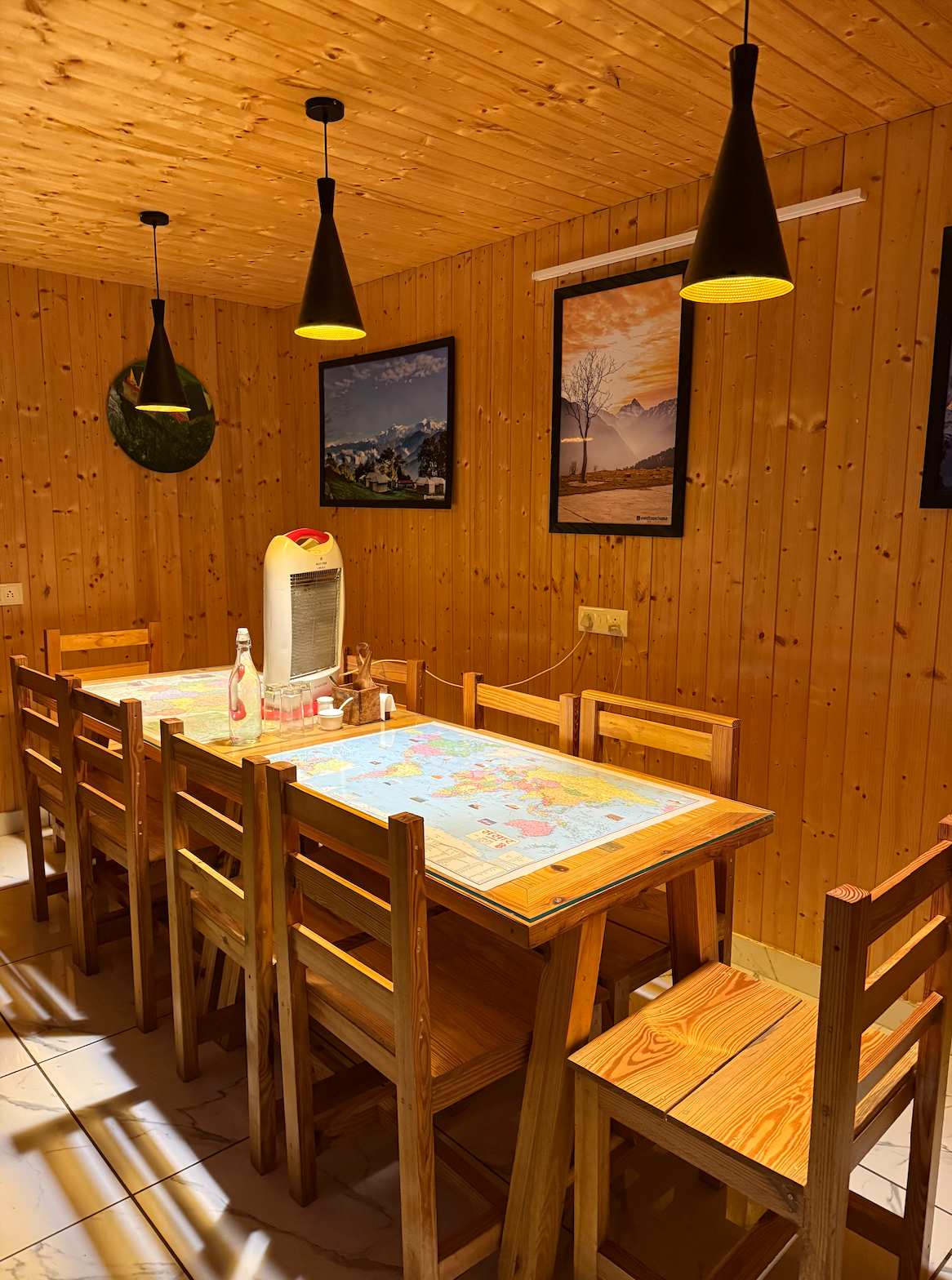
What struck me immediately was how compact everything felt. As soon as you enter, there’s a tiny restaurant area with one long dining table, 8-10 chairs, and a small reception counter tucked into the side. The kitchen sits right behind it, followed by the cottages lined up one after another, with barely enough room for someone to walk between them fi they wish to… and perhaps 4-5 meters of space in front.

I kept thinking that if the property were full, you’d probably hear every conversation happening in the next cottages. And because my cottage was the first one, anyone staying in the cottages beyond mine would have to walk past my room every single time they went anywhere.
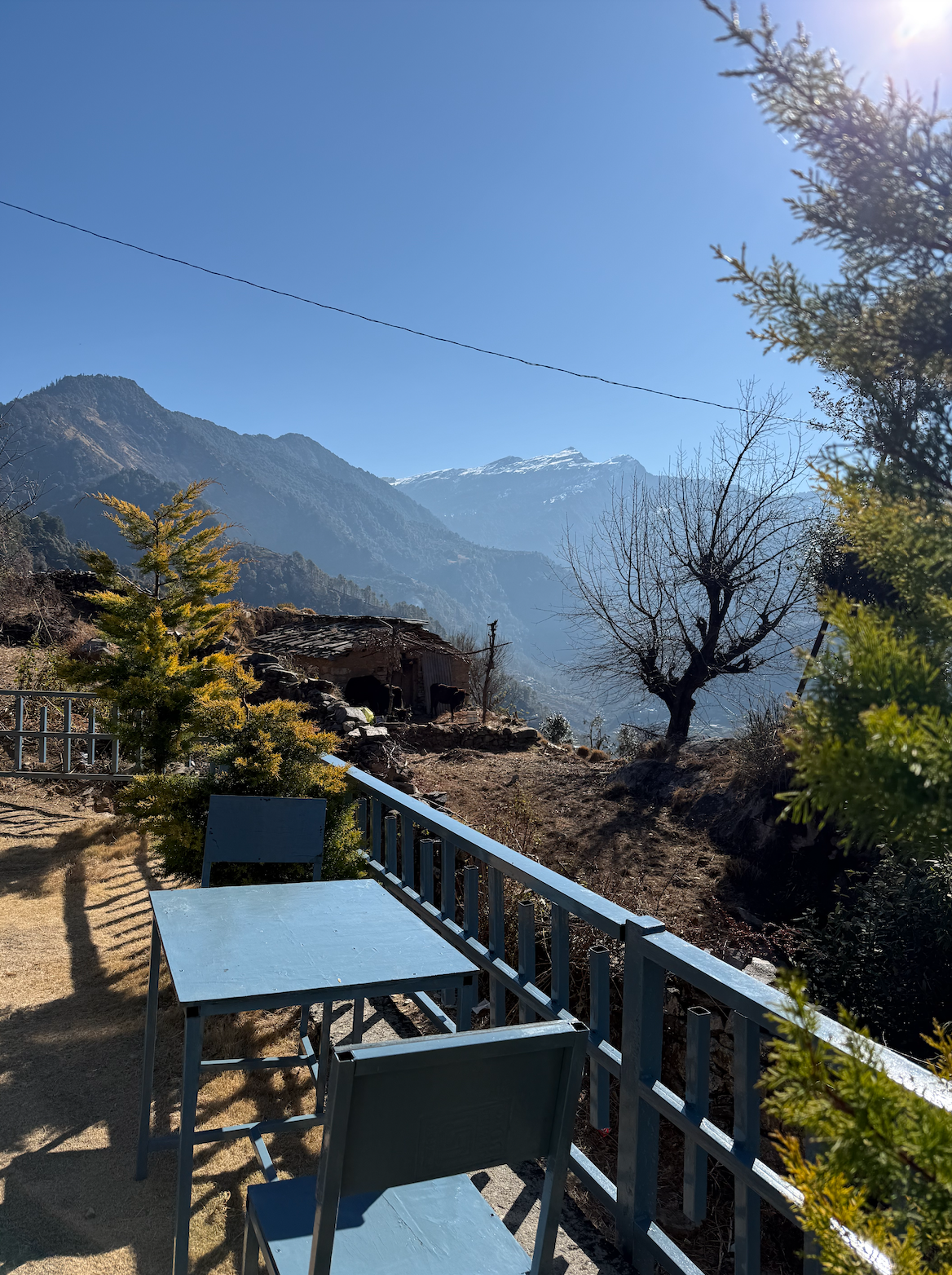
At the very end of the property is a little garden space with a couple of tables and chairs overlooking the hills. Cute, but again compact. So compact that you can’t even stand far back enough to fully see your own cottage from the pathway.

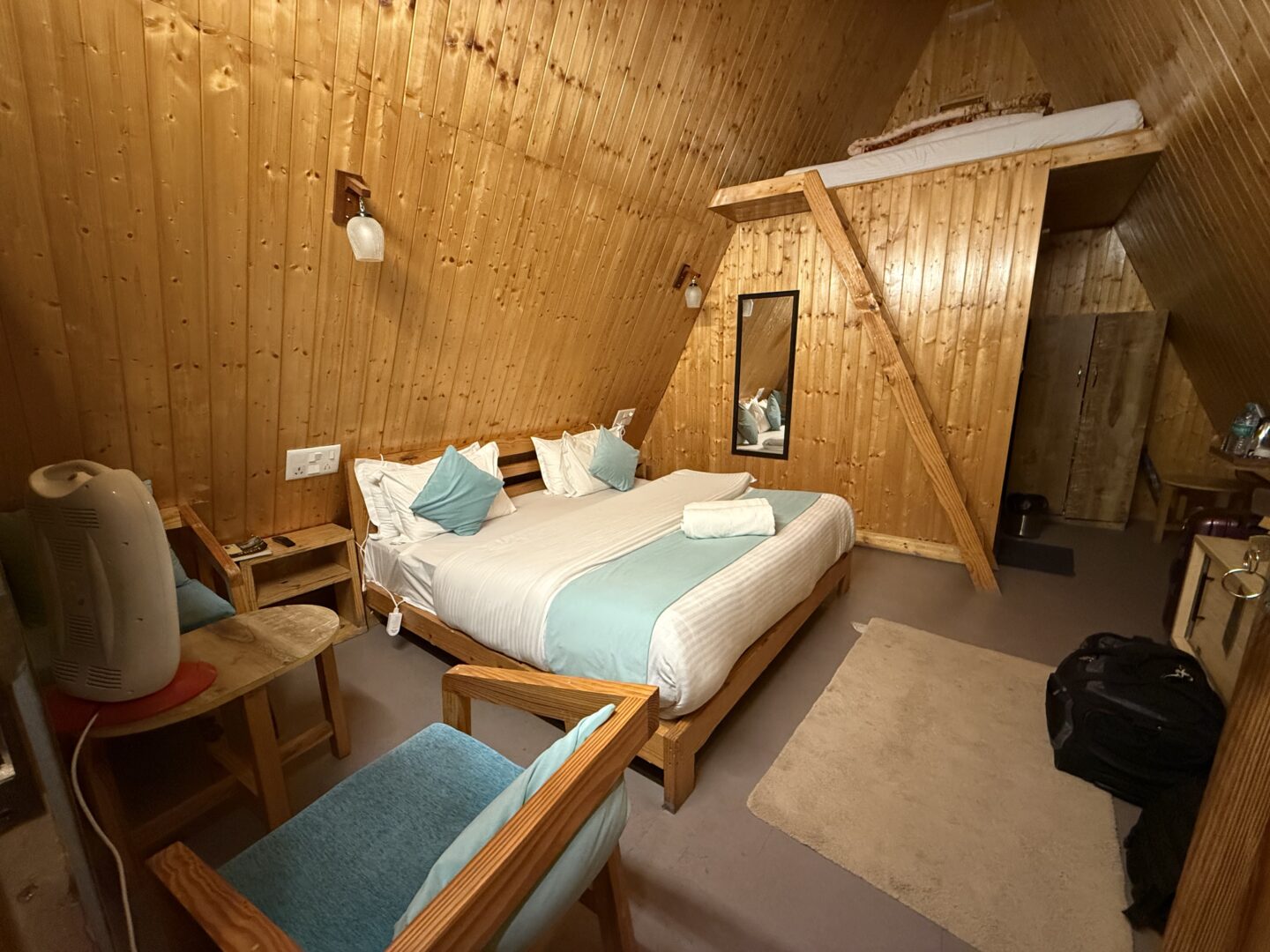
The rooms themselves follow the same pattern. Cozy in theory, but the sloping A-frame roof takes away a surprising amount of usable space. Half the room requires you to either duck slightly or sit awkwardly bent forward. The bathroom was small too – manageable, but not particularly well designed.
At night, it got freezing cold. During the day, the sun would come out and warm things slightly, but the air still carried that constant mountain chill. Lovely!
The tin roof, however, was an experience of its own.
All through the day and night, it kept making loud popping sounds – sharp metallic cracks that echoed through the cottage. I still don’t know whether it was water droplets, temperature changes causing the metal to expand and contract, or something else entirely. But the noise was constant enough that even a heavy sleeper would notice it.
The food though? Nice.
We had dinner there both nights and breakfast twice, and every meal felt warm and hearty after the cold outside. Simple Indian food – curries, rice, rotis, poha – but the kind that tastes better in the mountains for reasons nobody can properly explain. 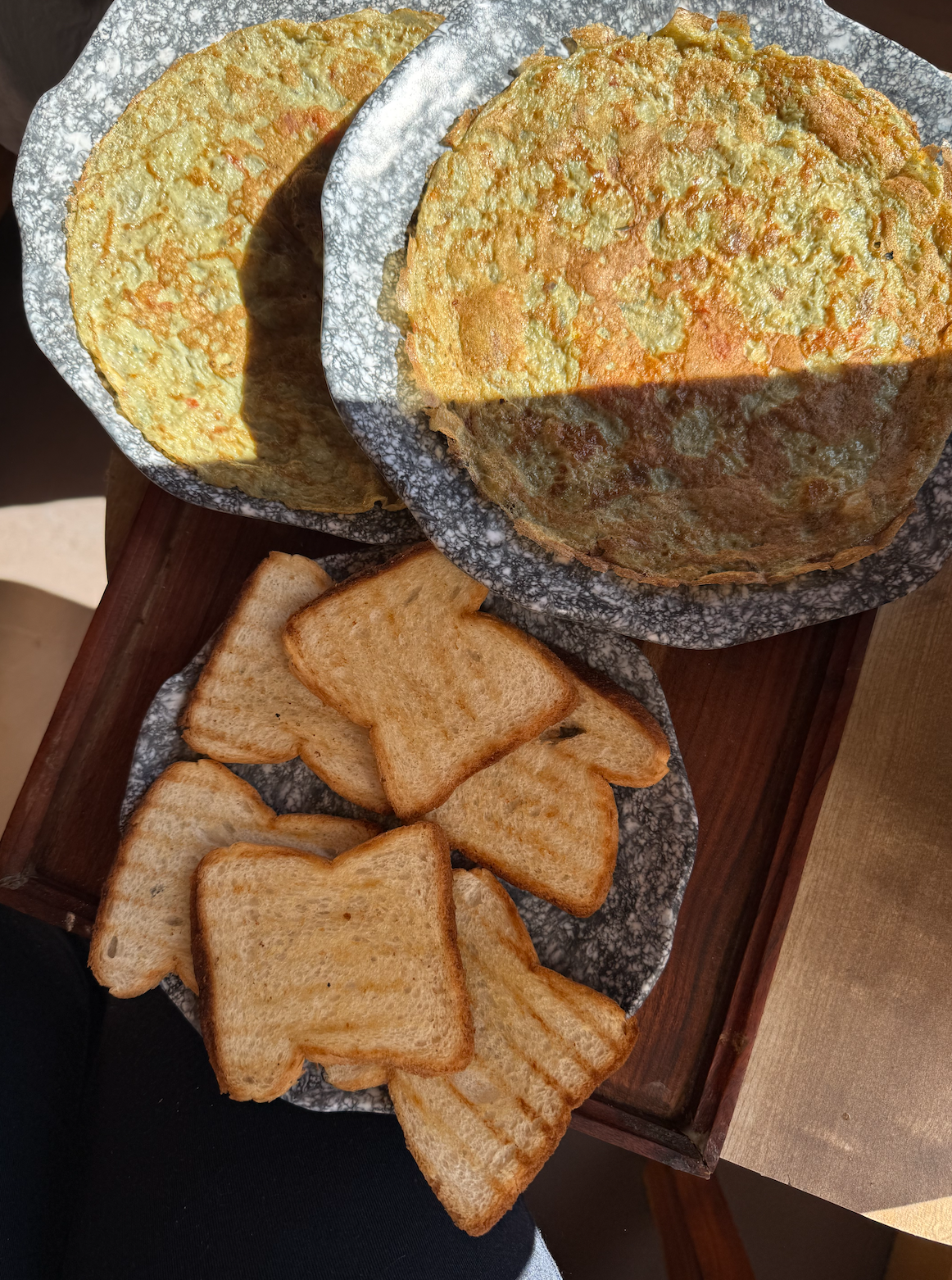

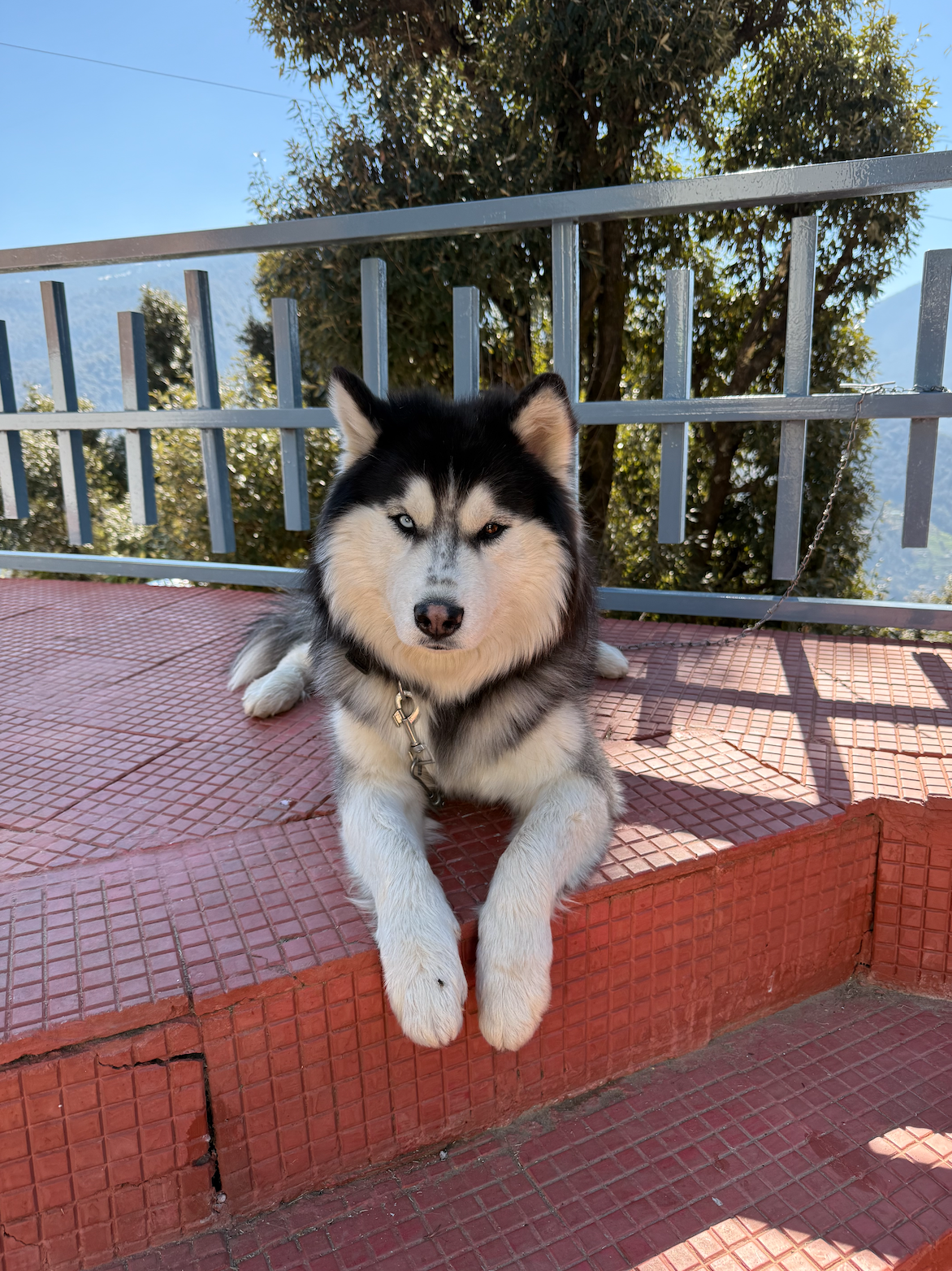
We also had a husky called Simba for company – a gorgeous young thing that couldn’t have been more than a year old.
Most of the time, he was tied up outside in the cold, except for maybe half an hour twice a day when the staff would let him loose. And during those brief windows of freedom, he transformed completely – running around excitedly, demanding attention, leaning into pets and happily hanging around us while we spoke to him.
Which made it even sadder. Dogs are deeply social animals. They crave interaction, stimulation and companionship, and seeing such a young, energetic dog tied up all day in the mountain cold felt awful. I kept asking the staff why he was always chained, and every time the answer was the same: “Owner wants it that way.”
Poor Simba. By the end of the trip, I was emotionally ready to dog-nap him and bring him back home with me. If you go here, do give him some love!




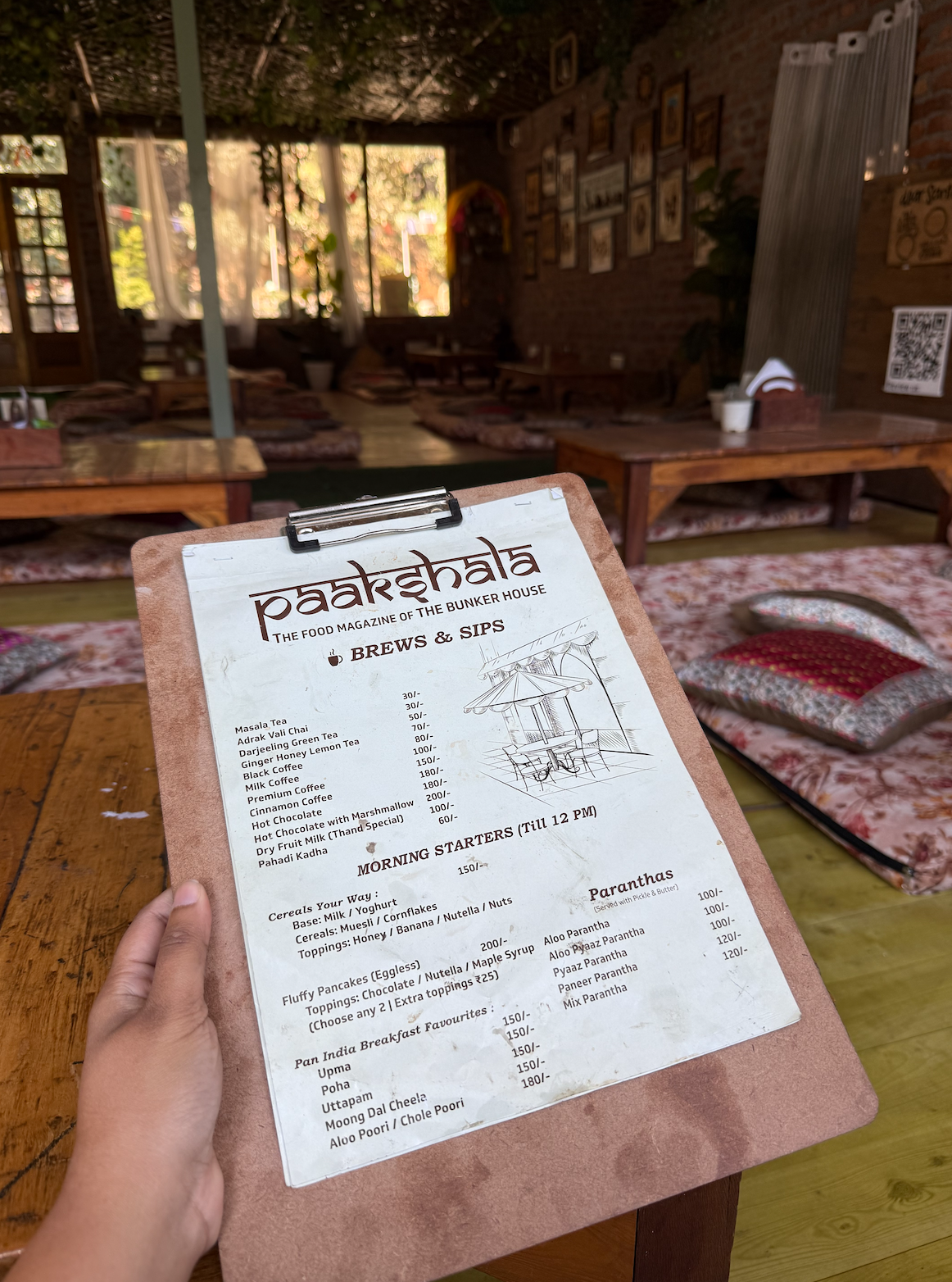
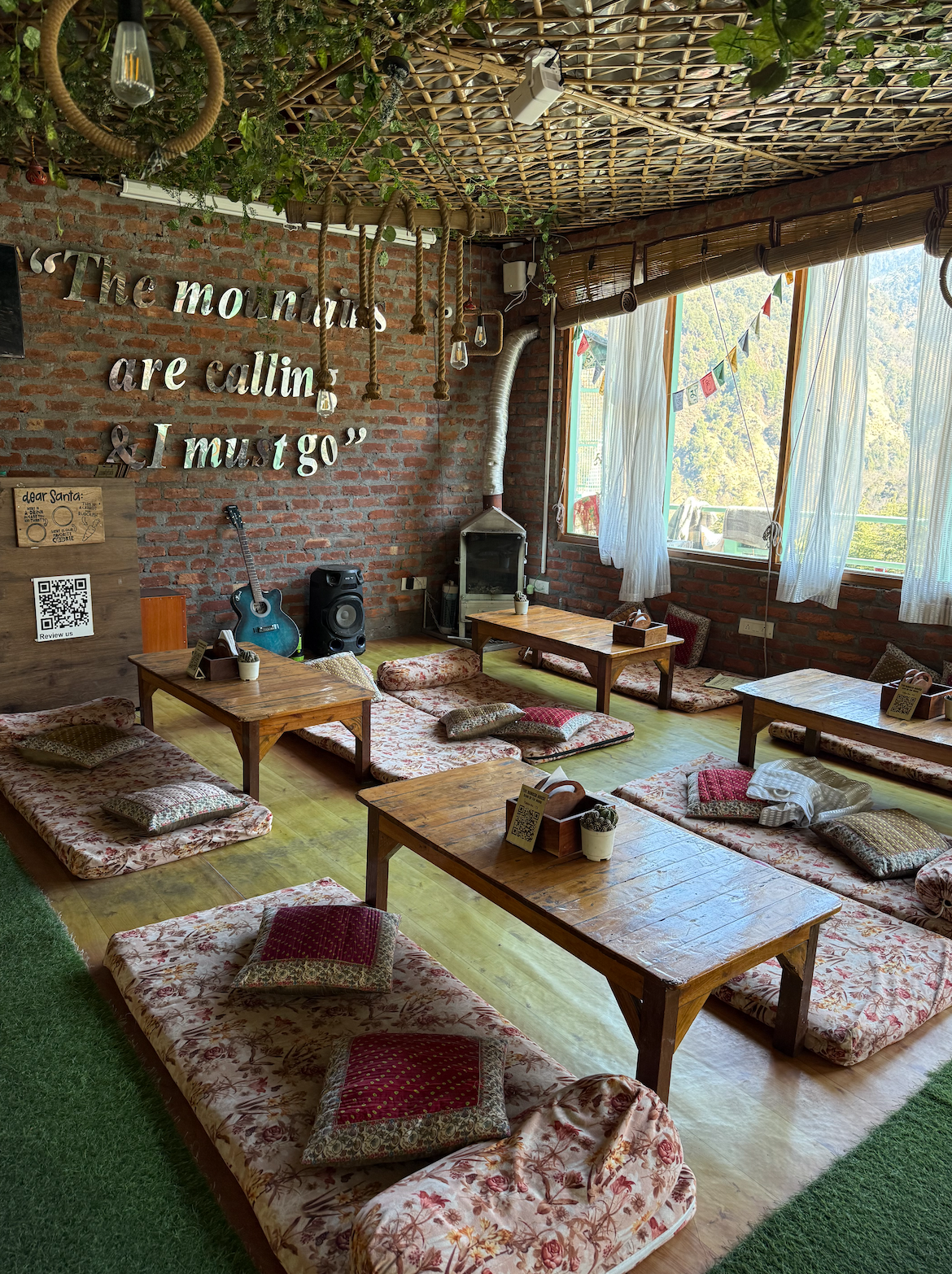
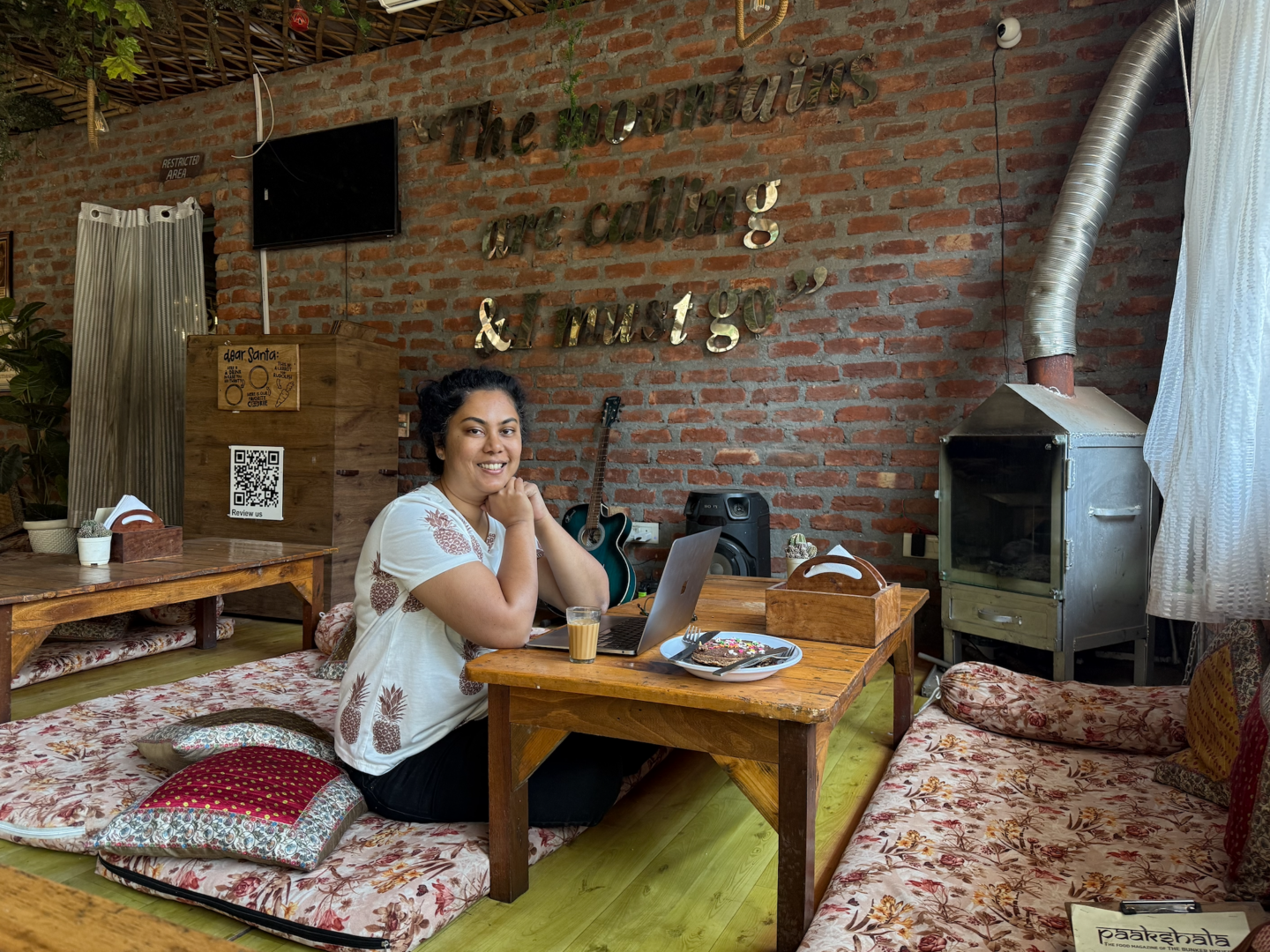
On our second day here, wanting a change of scenery and a place to sit for a bit, we found Bunker House for chai and some work.
It was the kind of place that instantly felt relaxed. Colourful interiors, low seating, mismatched cushions, no attempt at being polished or overly curated. Nobody hovered around us; in fact, it was quite the opposite. We had to write our order down ourselves on a little notepad, walk it over to the kitchen, and hand over the order. Then sit down and wait for the food to arrive when it arrives.
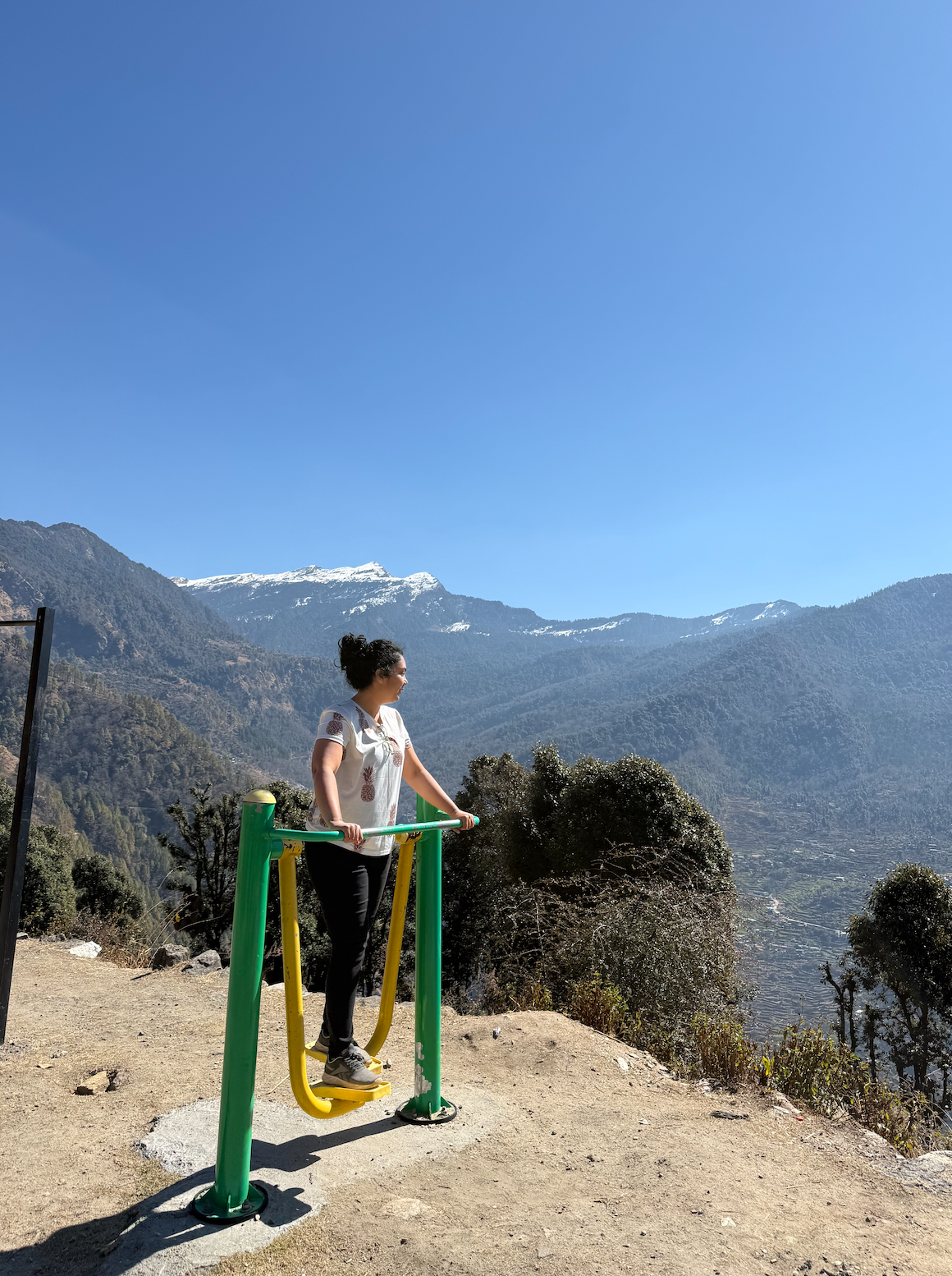
Naturally, there was no WiFi. Thankfully, though, our phone data worked well enough for us to get some work done in between cups of chai and long pauses staring outside. Now and then, we’d abandon our laptops, walk out to the balcony, and just stand there quietly looking at the mountains for a while before returning to work again.


Don’t come to Chopta expecting cafés every few metres or elaborate food scenes. There’s none of that happening!
MORE ABOUT CHOPTA
Chopta is less of a destination and more of a pause button. Most people come here for the Tungnath and Chandrashila treks – especially Tungnath, which is one of the highest Shiva temples in the world – but beyond that, there isn’t a whole lot “to do,” and I think that’s the point. Days revolve around chai, mountain views, simple hot meals, sudden weather changes, and trying not to freeze once the sun goes down. The altitude hits harder than expected, evenings become silent incredibly early, and even basic things like WiFi and long restaurant menus start disappearing.
And that was Chopta.
No life-changing revelations, no packed itineraries, just a few cold days spent slowing down, eating comforting food, staring at hills for unreasonable amounts of time, and adjusting to a kind of stillness I’m clearly not very used to.
I think that’s what I’ll remember most about this trip – not any one place or café or viewpoint, but the feeling of having nowhere urgent to be. Would I go back? Maybe. Though next time, I’d probably carry thicker socks, fewer expectations, and significantly stronger opinions about tin roofs.
Follow me on Instagram, Facebook, and X for more travel tales!