
If there is one thing you should make time for in Singapore, it is eating. And I don’t mean booking a table at one of the city’s fancy restaurants. Some of the best food in Singapore is served at hawker centres and markets, often for the price of a coffee and cake elsewhere.
Singapore’s food culture is a delicious mix of Chinese, Malay, Indian and Peranakan influences, with everything from Hainanese chicken rice and laksa to roti prata, satay, kaya toast and chilli crab. In 2020, Singapore’s hawker culture was added to UNESCO’s list of Intangible Cultural Heritage, recognising hawker centres as an important part of the country’s community and multicultural life.
The great thing for travellers is that you don’t need to know much about Singaporean food to enjoy it. Find a busy food centre, walk around, see what everyone else is eating and start ordering.
And if you’re travelling with someone else, even better because you can share everything. That is the best way to do a food tour in Singapore or for that matter, anywhere. Rather than eating one enormous meal at every stop, order one or two dishes, share them, wander around, and move on.
This guide covers the best hawker centres and food markets in Singapore, what to eat at each, how much you can expect to spend, when to go, how crowded they get and whether I think they’re worth making time for. I also have a Singapore travel guide covering all the attractions you can make time for in 2026.
Best Hawker Centres in Singapore: Where to Eat, What to Try & More
First, let me tell you that there is a difference between a hawker centre and a market, although the two often overlap. A hawker centre is a collection of food stalls. On the other hand, markets such as Tiong Bahru Market and Tekka Centre also have wet-market sections selling fresh produce, meat, seafood and other ingredients.
For a visitor, that distinction doesn’t matter too much. What matters is that these are some of the best places to experience Singapore’s food culture without spending restaurant prices.
1. Maxwell Food Centre
Best for: First-time visitors and classic Singaporean dishes
Budget: Around S$5–15 per person
Time to allow: 45–90 minutes
Crowds: Busy, particularly around lunch
Best time to visit: Before noon or after 2pm
Worth the detour? Yes
If you’ve been researching food in Singapore for more than five minutes, you’ve probably come across Maxwell Food Centre.
It’s in Chinatown and is one of Singapore’s most famous hawker centres, best known for Tian Tian Hainanese Chicken Rice. But don’t make the mistake of coming all the way here, getting chicken rice and leaving. There are dozens of other stalls worth investigating, from oyster cakes and porridge to popiah, fish soup and nasi lemak.
Maxwell Food Centrr is particularly convenient for a first-time visitor because you can combine it with a day exploring Chinatown. While the centre is busy during lunch time, especially at the popular stalls, the other food stalls have much shorter waits and equally enthusiastic regulars.
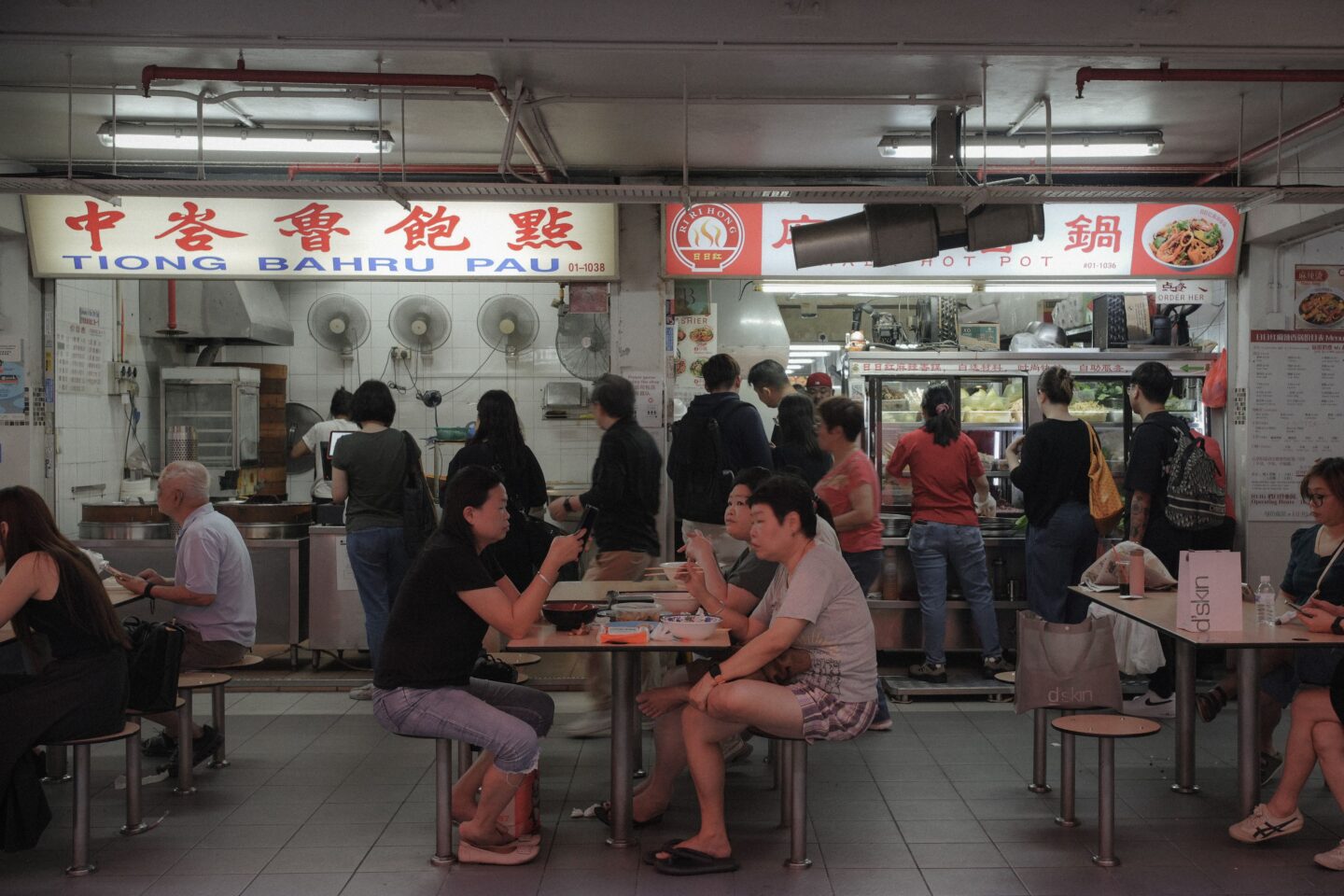
What to eat at Maxwell Food Centre
- Hainanese chicken rice
- Porridge
- Oyster cake
- Oyster omelette
- Popiah (a thin, paper-like fresh spring roll filled with a savory mix of braised vegetables and meats)
- Fish soup
- Nasi lemak
- Local drinks and fresh juices
Tip: Check the individual stall’s hours rather than relying on the food centre’s opening hours. Maxwell itself can stay open late, but the stalls you’re actually interested in may not.
2. Chinatown Complex Food Centre
Best for: The biggest variety in one place
Budget: Around S$4–12 per person
Time to allow: 60–90 minutes
Crowds: Busy at lunch and dinner
Best time to visit: Around 10.30–11.30am or 5–6pm
Worth the detour? Absolutely, particularly for food lovers
If Maxwell Food Centre is the easy introduction to Singapore’s hawker culture, Chinatown Complex is where you go when you want to get serious about eating. It is one of the largest hawker centres in Singapore, with more than 260 stalls, so trying to “see everything” is pointless. You’d need a second stomach. The choice is enormous: chicken rice, char kway teow, Hokkien mee, satay, dim sum, bak kut teh, kway chap, seafood, desserts and plenty more. There are also Michelin-recognised stalls here, which is one reason it gets plenty of attention from visitors.
The centre just underwent a major renovation this year so you’ll enjoy better lighting, ventilation, signage and additional lifts. So if you remember older descriptions of the place being a little grimy or confusing, some of that information is now out of date.
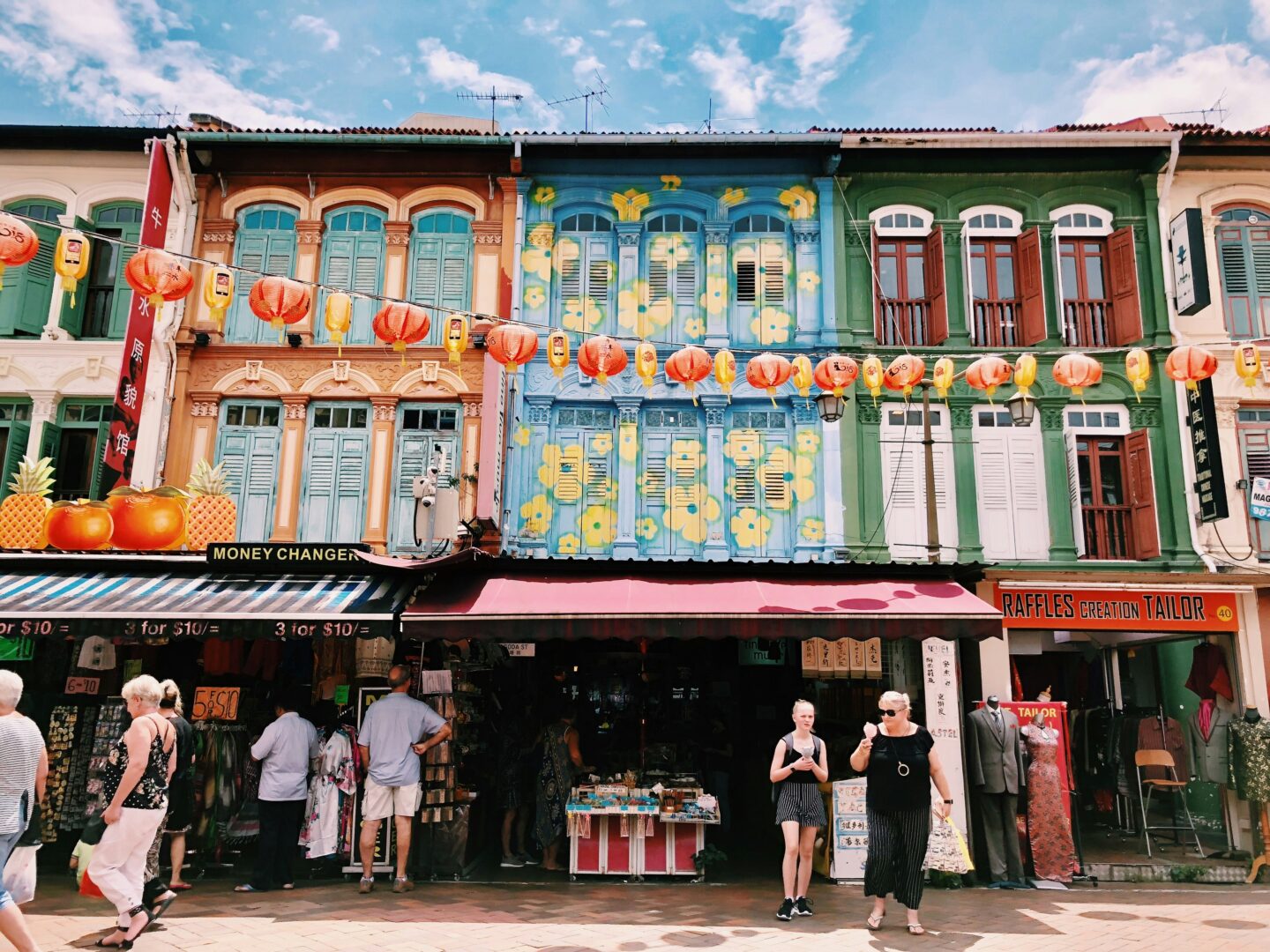
What to eat at Chinatown Complex
- Chicken rice
- Char kway teow
- Hokkien mee
- Satay
- Dim sum
- Bak kut teh
- Kway chap
- Chendol
- Ice kachang
- Soya beancurd
Tip: Don’t come here at peak lunch hour if crowds stress you out. The centre is popular for good reason, but the combination of queues and limited seating can make the experience considerably less relaxed.
3. Tiong Bahru Market
Best for: Food + one of Singapore’s nicest neighbourhoods
Budget: Around S$3–10 per person
Time to allow: 1–2 hours including exploring the neighbourhood
Crowds: Busy around breakfast and lunch
Best time to visit: Morning
Worth the detour? Yes
Tiong Bahru is one of the neighbourhoods I’d recommend exploring even if you weren’t looking for food. It has some of Singapore’s most distinctive pre-war architecture, independent shops, cafés and a slower neighbourhood feel. Right in the middle of it is Tiong Bahru Market, with a wet market downstairs and a food centre upstairs.
The food centre is known for dishes including chwee kueh, roasted duck rice, pig organ soup and prawn noodles, alongside all the usual Singaporean favourites. It has also been renovated and is regarded as one of the cleaner, more spacious hawker centres, with better ventilation than some of the older centres.
What to eat at Tiong Bahru Market
- Chwee kueh
- Hainanese chicken rice
- Roast duck rice
- Prawn noodles
- Wonton mee
- Bak kut teh
- Pig organ soup
Individual dishes are generally around S$3–5, although obviously you can spend more if you’re sampling several things.
My take: Don’t make this a quick food stop. Have breakfast here, then walk around Tiong Bahru afterwards. It makes for a much more interesting morning than simply ticking another hawker centre off your list.
4. Old Airport Road Food Centre
Best for: Serious food exploration
Budget: Around S$5–15 for a meal; more if you’re grazing
Time to allow: 90 minutes–2 hours
Crowds: Busy at meal times
Best time to visit: Mid-morning or mid-afternoon on a weekday
Worth the detour? Yes, if food is a priority
Old Airport Road Food Centre is one of the places I’d put high on the list for anyone who is genuinely interested in Singaporean food rather than simply looking for a famous Instagram stop. Dating back to 1973, it is one of Singapore’s oldest and largest hawker centres and has an enormous selection of stalls.
You’ll find char kway teow, Hokkien mee, prawn noodles, lor mee, kway chap, satay, rojak, soya beancurd and plenty more. It was refurbished a couple of years ago, with new tables, chairs, toilets and cooling fans, so it is more comfortable than before.
What to eat at Old Airport Road Food Centre
- Char kway teow
- Hokkien mee
- Prawn noodles
- Lor mee
- Kway chap
- Rojak
- Soya beancurd
- Satay
Tip: Give yourself more time here than you think you’ll need. With this many stalls, you’ll spend half your time deciding what to eat. And check the opening days of individual stalls. The centre may be open, but the particular stall you travelled for may be taking its weekly day off.
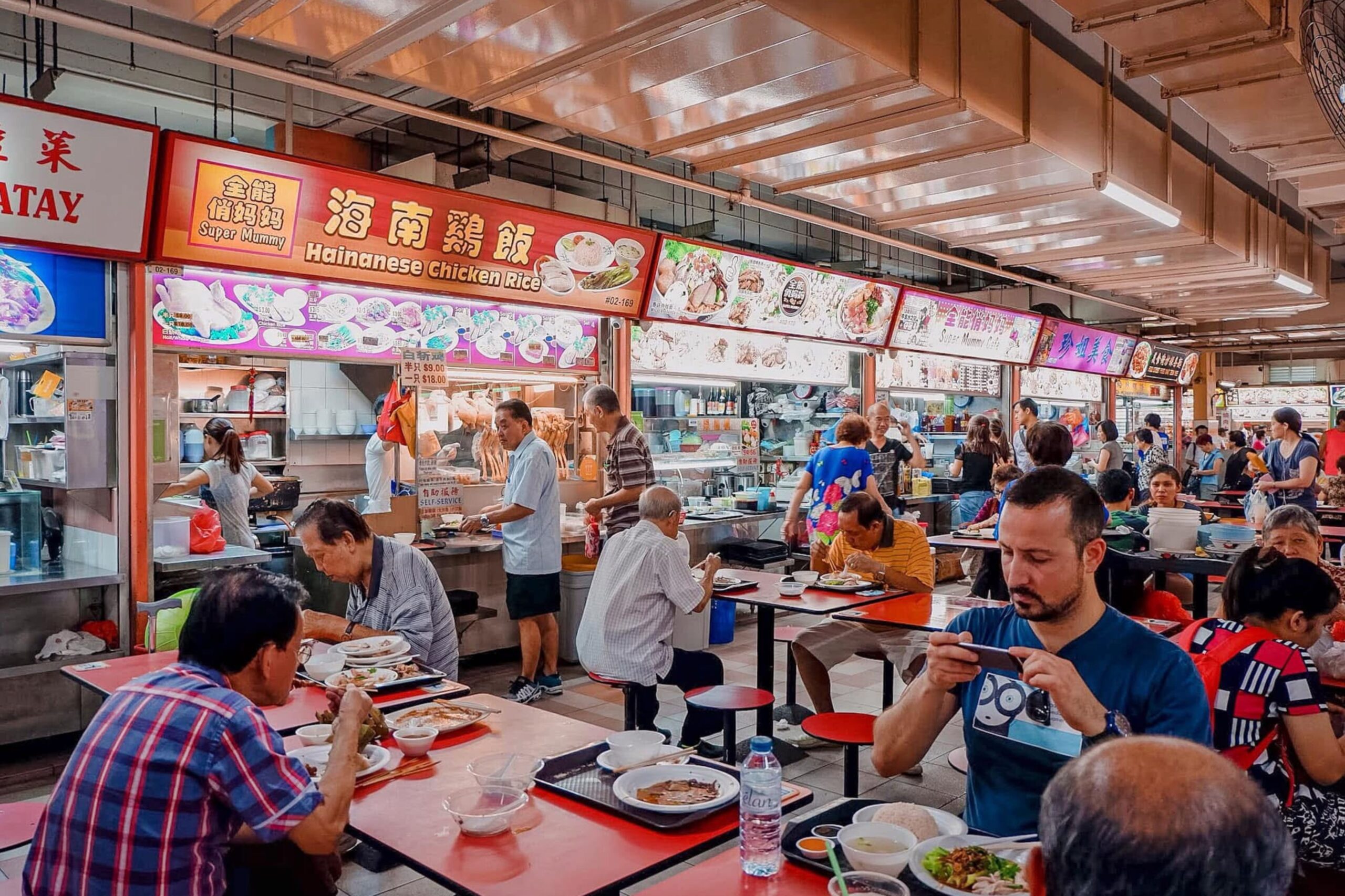
5. Tekka Centre
Best for: Indian food, Little India and a proper market experience
Budget: Around S$5–15 per person
Time to allow: 1–2 hours
Crowds: Busy, particularly around meals
Best time to visit: Morning to early afternoon
Worth the detour? Yes
Tekka Centre is one of the better places to visit when you want your Singapore food experience to extend beyond the usual chicken rice-noodles-satay circuit. Located in Little India, it combines a wet market, food centre and shopping area. The neighbourhood itself is part of the experience: colourful shops, flower stalls, spice shops, Indian clothing stores and the smell of curry drifting through the streets.
The food centre is particularly good for Indian and Singaporean-Indian food, including biryani, curries, roti prata and other South Indian favourites.
Tekka currently has operating hours around 6.30am–9pm for the centre, although individual stalls vary.
What to eat at Tekka Centre
- Biryani
- Roti prata
- Dosa
- South Indian meals
- Indian sweets
- Curries
- Fresh juices
My take: This is one where I’d combine the food with the neighbourhood. Come hungry, eat, then walk through Little India rather than treating Tekka as a standalone attraction.
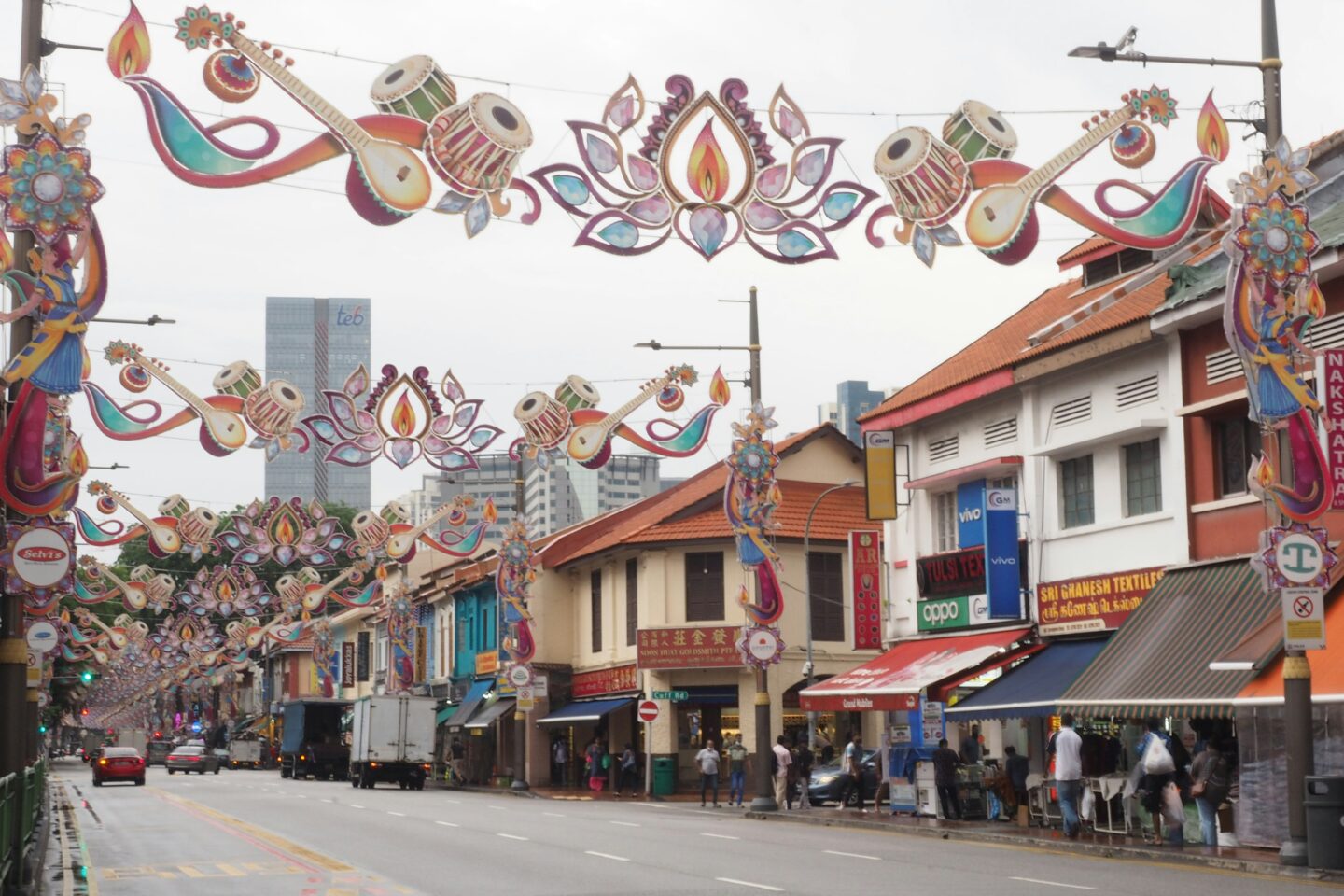
6. Lau Pa Sat & Satay Street
Best for: Evening atmosphere and satay
Budget: Around S$10–20 per person if you’re grazing
Time to allow: 60–90 minutes
Crowds: Busy at lunch and after dark
Best time to visit: From around 7pm
Worth the detour? Yes – especially at night
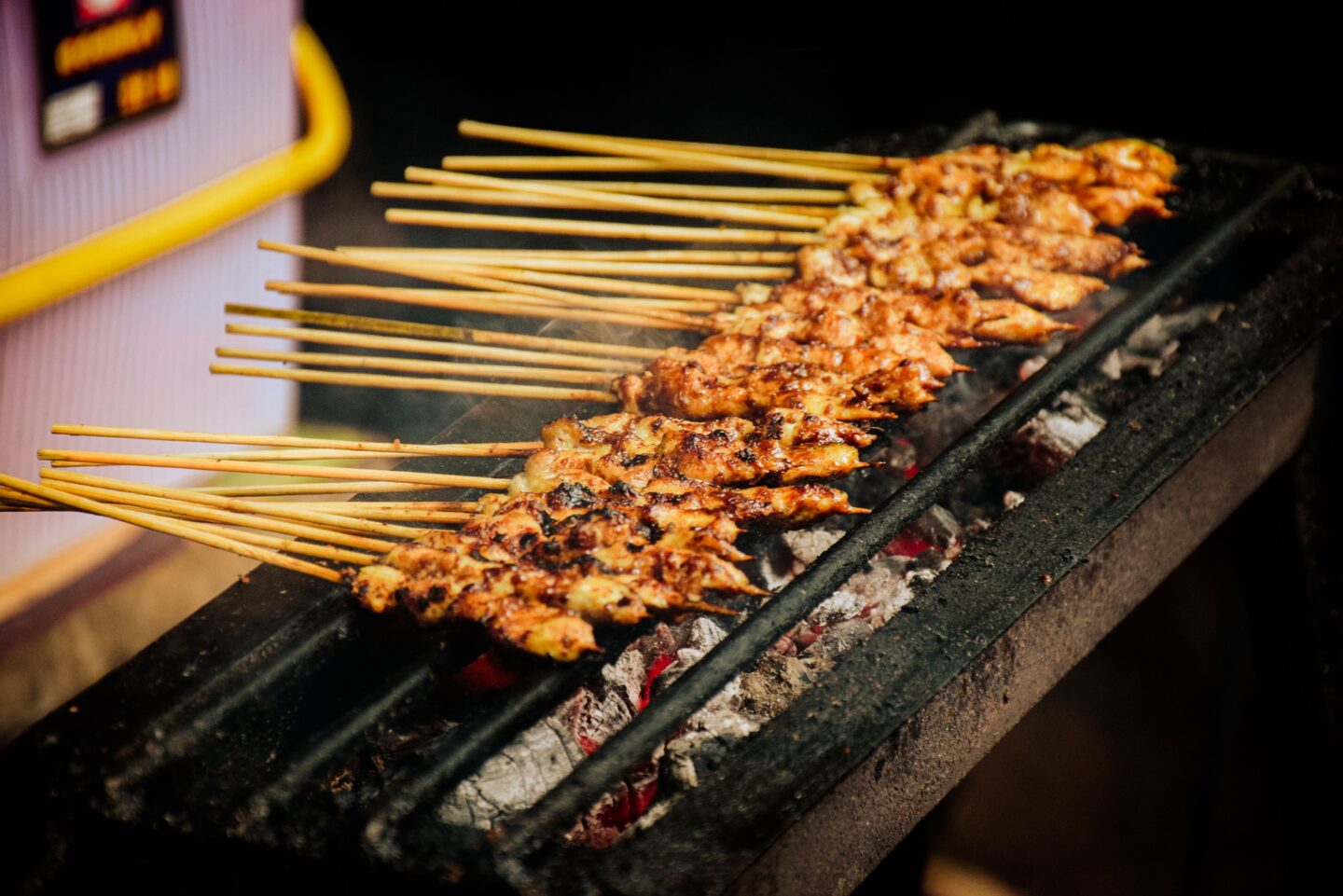
Lau Pa Sat is one of Singapore’s most recognisable food halls, sitting rather dramatically in the middle of the CBD. During the day, office workers fill the place. At night, things get considerably more interesting when Satay Street springs to life outside.
From around 7pm, the street is closed to traffic and lined with satay stalls and communal tables. Recent visitors describe it as busy, smoky, lively and very much an experience rather than simply somewhere to grab dinner. The satay stalls sell chicken, beef, mutton and prawns, and the most popular stalls can have fairly long queues. Recent reviews mention waits of around 20 minutes at busy times.
What to eat at Lau Pa Sat
- Chicken satay
- Beef satay
- Mutton satay
- Prawn satay
- Char kway teow
- Roti prata
- Local drinks
Satay Street operates from around 7pm until late, while the main Lau Pa Sat food market operates much longer hours.
Tip: If you want the full Satay Street atmosphere, go after 7pm. If you hate crowds, don’t. Also, expect smoke. Lots of it.
7. Amoy Street Food Centre
Best for: Office-lunch food and a less touristy hawker experience
Budget: Around S$5 – 15 per person
Time to allow: 30 – 60 minutes
Crowds: Very busy on weekday lunch breaks
Best time to visit: Early lunch or late morning on a weekday
Worth the detour? Yes, if you’re in the CBD
Amoy Street Food Centre is an interesting contrast to Maxwell and Lau Pa Sat. It’s in the CBD, so it serves a lot of office workers. That means the atmosphere changes dramatically depending on when you visit. Come at lunchtime on a weekday and you can expect queues and a serious scramble for seats. It is almost chaotic during office lunch hours, with some stalls selling out early. Come outside those hours and it is a much more relaxed experience.
Many stalls don’t operate at night or on weekends. The centre itself may have long published opening hours, but that doesn’t mean your chosen stall will be open.
What to eat at Amoy Street Food Centre
- Noodles
- Rice dishes
- Dumplings
- Bak zhang
- Curry
- Local snacks
- Singaporean classics
My take: This is one for people who want to eat where people who work in the CBD actually eat. Don’t come on a Sunday expecting the same experience as Tuesday lunchtime.
8. Hong Lim Market & Food Centre
Best for: Local food, Michelin-recognised stalls and Chinatown without quite as much tourist focus
Budget: Around S$6-10 per person
Time to allow: 30-60 minutes
Crowds: Busy, especially around lunch
Best time to visit: Morning or before peak lunch
Worth the detour? Yes
Hong Lim is another Chinatown-area hawker centre that deserves more attention than it gets. It has two levels of food stalls alongside the market, and visitors regularly praise the variety and quality of the food. You’ll love everything from char kway teow and wanton mee to curry noodles and Malay food. One of the things I like about this centre is that it doesn’t feel as though it exists purely for visitors. It is a working neighbourhood food centre, which is exactly what you’re looking for if you want to see the everyday side of Singapore’s hawker culture.
What to eat at Hong Lim
- Curry chicken noodles
- Char kway teow
- Wanton mee
- Hor fun
- Nasi Padang
- Malay dishes
- Other local noodle dishes
Tip: If you’re already spending the day in Chinatown, you can easily combine Hong Lim with Chinatown Complex and Maxwell rather than making a separate trip. Just don’t try to eat at all three unless you have a very ambitious appetite.
9. Geylang Serai Market
Best for: Malay food and a different side of Singapore
Budget: Around S$5-15 per person
Time to allow: 45-90 minutes
Crowds: Varies; especially lively around festive periods
Best time to visit: Morning to early afternoon
Worth the detour? Yes, if you’re interested in Singapore’s Malay culture
Geylang Serai is where I’d go when I wanted to get away from the standard Singapore food checklist. The market is closely associated with Singapore’s Malay community and is a particularly good place to explore Malay food, snacks, ingredients and traditional sweets.
The market itself generally operates during the day rather than late into the evening.. from 7 AM to about 3 PM.
What to look for
- Nasi padang
- Malay curries
- Mee soto
- Nasi lemak
- Traditional Malay sweets
- Kueh
- Snacks and festive foods
It becomes particularly lively around Ramadan and Hari Raya, when temporary food stalls and festive bazaars transform the area.
My take: Don’t judge Geylang Serai by whether it has the same tourist buzz as Maxwell. You’re coming here for the food and the cultural context.
10. Changi Village Hawker Centre
Best for: A neighbourhood food stop, especially if visiting Pulau Ubin
Budget: Around S$3-10 per person
Time to allow: 45-60 minutes
Crowds: Usually more relaxed than the central tourist favourites
Best time to visit: Morning or before/after a trip to Pulau Ubin
Worth the detour? Yes, if you’re already in the area
Changi Village is not somewhere I’d send you across Singapore purely because you’ve heard it has a good hawker centre. But if you’re heading to Changi Point Ferry Terminal or Pulau Ubin, it makes perfect sense. The hawker centre is known for dishes such as nasi lemak, mee soto, goreng pisang, fish soup and other Malay and local favourites. Current guides put many meals around S$3 – 10.
Some people love the neighbourhood atmosphere and individual stalls, while others may feel particular famous dishes are overrated.
What to eat at Changi Village
- Nasi lemak
- Mee soto
- Fish soup
- Goreng pisang
- Hor fun
- Satay
- Traditional desserts
My take: Pair this with Pulau Ubin or a Changi Village morning rather than making it a standalone food pilgrimage.
11. Newton Food Centre
Best for: Seafood, satay and a famous Singapore hawker experience
Budget: Around S$10-25 per person
Time to allow: 60-90 minutes
Crowds: Busy, but quieter at some weekday times
Best time to visit: Late afternoon or early evening
Worth the detour? Yes, but don’t go just because of Crazy Rich Asians
Newton Food Centre became internationally famous after appearing in Crazy Rich Asians, but it was a well-known hawker centre long before Hollywood came along. It’s particularly associated with seafood, satay, chicken wings and other classic hawker dishes.
Newton gets mixed opinions compared with some of Singapore’s more neighbourhood-oriented hawker centres. Its Crazy Rich Asians fame means it is firmly on the tourist circuit, and prices can be higher than at some less-visited centres. I’d still go if you’re nearby or particularly interested in seafood and satay, but with limited time, it wouldn’t be my first choice.
What to eat at Newton
- BBQ seafood
- Satay
- BBQ chicken wings
- Stingray
- Fish soup
- Indian food
- Local noodles and rice dishes
My take: If Newton fits naturally into your itinerary, go. But if you have only three days in Singapore and are choosing between Newton and one of the more interesting neighbourhood hawker centres, I’d prioritise the latter.
What should you eat on a Singapore food tour?
Now comes the difficult part. There are far too many things worth eating. But if this is your first trip, these are the dishes I’d make a point of trying.
Hainanese chicken rice
Probably Singapore’s most famous dish. It has poached or roasted chicken served with fragrant rice cooked in chicken stock, alongside chilli sauce, ginger and dark soy. It sounds simple and that’s exactly why the good versions stand out.
Laksa
A rich, spicy noodle soup, generally made with a coconut-based broth in the Singapore style. It’s filling, fragrant and one of the best ways to experience the Malay and Chinese influences that run through Singaporean food.
Char kway teow
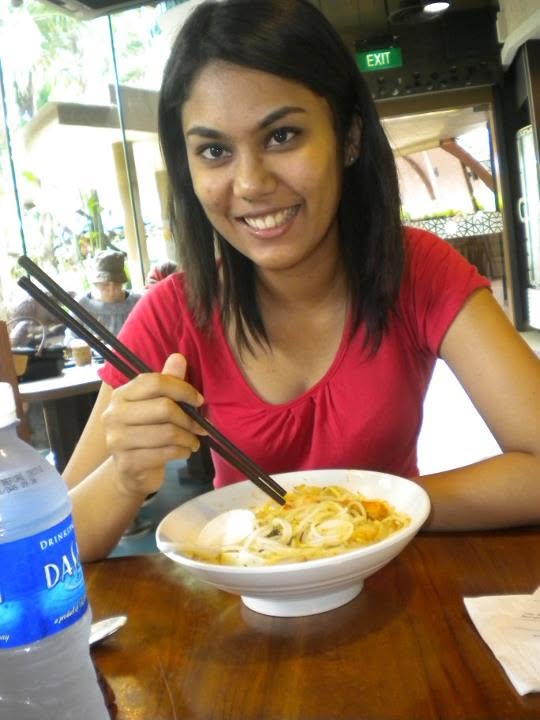
Flat rice noodles stir-fried with ingredients such as prawns, Chinese sausage, bean sprouts and egg. The good stuff should have that smoky, slightly charred flavour known as wok hei. Eat it immediately. This isn’t food that improves while sitting around taking photographs.
Satay
Grilled meat on skewers with peanut sauce, cucumber, onion and rice cakes. Chicken, beef and mutton are common, while some places also serve prawn satay. Lau Pa Sat’s Satay Street is the obvious tourist-friendly place to try it, but satay appears all over Singapore.
Kaya toast
Toast with kaya, a sweet coconut-and-egg spread, usually served with soft-boiled eggs and kopi or tea. It’s a classic Singaporean breakfast and a much better way to start a day than a hotel buffet when you’re trying to explore the local food culture.
Roti prata
Flaky Indian-influenced flatbread that can be eaten with curry or ordered in sweet versions. It’s particularly good for breakfast, supper or any time you realise you have room for one more thing.
Chilli crab
The dish that appears on practically every Singapore food list. Crab is cooked in a sweet, savoury, spicy tomato-and-chilli sauce, usually eaten with bread or buns to mop up the sauce. It is considerably more expensive than hawker food, but if you like crab, this is one of the Singapore splurges I’d consider worthwhile.
Bak kut teh
A peppery pork-rib soup served with rice and various accompaniments. There are different versions, but Singapore’s style is generally known for its strong peppery broth.
Can you explore Singapore’s hawker centres on your own?
You don’t have to. Singapore is one of the easiest cities in which to create your own food tour. The hawker centres are accessible, food is relatively affordable and you can simply order as you go.
But a guided food tour can be worthwhile if you want context as well as food.
A good guide can explain where dishes came from, how Singapore’s different communities influenced the food scene, how hawker centres developed and perhaps most importantly – what you’re actually looking at on a menu.
I’d consider booking one if:
- You don’t know much about Singaporean food
- You only have a couple of days in the city
- You’re nervous about ordering unfamiliar dishes
- You want to explore neighbourhoods beyond the tourist circuit
- You are particularly interested in food history and culture
I’d skip it if:
- You enjoy exploring independently
- You’re travelling on a tight budget
- You have several days in Singapore
- You already know which dishes you want to try
- You’d rather eat at your own pace
One good strategy is to do one guided food tour early in your trip, then use what you’ve learnt to explore independently afterwards.
How to explore Singapore’s hawker centres
As someone who travels to eat, my advice would be to not treat a hawker centre like a restaurant. If you arrive starving and order one enormous meal, you’ll be too full to try anything else.
Instead, order one or two things and share them. Then move on.
Chinatown food tour
Start at Chinatown Complex Food Centre, then walk towards Maxwell Food Centre and explore Chinatown between meals. If you’re still hungry, Hong Lim Market & Food Centre is another option nearby. You don’t need to eat at all three. Your stomach will file a formal complaint.
Little India food tour
Start at Tekka Centre for breakfast or lunch, then walk through Little India. Stop for Indian sweets, snacks, chai or a fresh juice along the way.
Tiong Bahru food tour
Have breakfast at Tiong Bahru Market, then spend the rest of the morning exploring the neighbourhood. This is one of the nicest food-plus-neighbourhood combinations in Singapore.
CBD food tour
Have lunch at Amoy Street Food Centre, then explore the CBD. Come back to Lau Pa Sat in the evening for satay. Just don’t attempt Amoy at peak office lunch hour if you dislike crowds.
Changi food day
If you’re going to Pulau Ubin, start or finish at Changi Village Hawker Centre. That gives you a food stop without making the food centre itself the destination.
How much does food cost in Singapore?
Singapore can be expensive but hawker food doesn’t have to be.
For a straightforward hawker-centre meal, I’d budget roughly S$5–15 per person. If you’re sharing several dishes and deliberately food-hopping, S$15–25 per person is more realistic.
Individual dishes can still be very inexpensive – Chinatown Complex, for example, has dishes starting around S$2, while Old Airport Road has many dishes in the S$4-6 range.
The price climbs when you start ordering seafood, larger portions or multiple dishes. And obviously, chilli crab is not going to cost the same as chicken rice. The nice thing about hawker centres is that you can control how much you spend.
You can have a S$5 lunch or you can spend S$20 wandering around trying five different things. Both are perfectly valid.
When is the best time to visit Singapore’s hawker centres
This matters more than you might expect.
Breakfast: Roughly 7-10am
Good for kaya toast, kopi, porridge and some noodle dishes.
Lunch: 12-2pm
This is peak time at many centres, particularly those in office districts.
Afternoon: 2–5pm
Usually quieter, but many stalls may close or sell out.
Dinner: 5.30-8pm
Busy again, particularly at popular centres.
Late night: Depends entirely on the centre and the stalls.
And this is important: a food centre being open does not mean every stall is open.
Are Singapore’s hawker centres crowded?
Some are and some aren’t. And even the same hawker centre can feel completely different at 11am and 1pm.
If you hate crowds, aim for early lunch, late lunch or mid-afternoon. If you want the classic Singaporean experience, go during a busy period and embrace it.
There is something quite fun about seeing an entire food centre operating at full speed – queues forming, trays moving, people sharing tables and hawkers working through orders at a pace that makes your average restaurant kitchen look positively relaxed.
Food markets vs hawker centres: which should you visit?
If you have limited time, I’d choose based on what you want from the experience.
For your first Singapore trip
Maxwell Food Centre
It’s easy to combine with Chinatown and gives you a good introduction to classic Singaporean food.
For serious food exploration
Chinatown Complex or Old Airport Road Food Centre
More choice, more stalls and more reason to wander.
For neighbourhood atmosphere
Tiong Bahru Market
Come for breakfast and stay for the neighbourhood.
For Indian food
Tekka Centre
Particularly good when combined with Little India.
For an evening experience
Lau Pa Sat + Satay Street
The food is only half the reason to come.
For Malay food
Geylang Serai
Especially interesting during Ramadan and Hari Raya.
For something less touristy
Hong Lim Market & Food Centre
Particularly if you’re already in Chinatown.
For a Pulau Ubin day
Changi Village Hawker Centre
Eat before or after the ferry.
A few things to know before eating at Singapore’s hawker centres
Bring some cash
Many stalls accept cashless payments now, but don’t assume every stall accepts your preferred payment method. Having some Singapore dollars and smaller notes makes things easier.
Share your food
This is the most important one. Two people ordering two full meals means you’ll miss out on half the fun. Order several things and share.
Don’t judge a stall by the queue alone
A long queue can mean something is excellent. It can also mean something is famous. Those aren’t necessarily the same thing. If you see a huge line at one stall, look around before joining it. There may be another excellent stall five metres away.
Check opening days
Hawker centres are not restaurants with uniform opening hours. Individual stalls have their own schedules, and some close when they’ve sold out.
Don’t expect air conditioning
Many hawker centres are open, naturally ventilated spaces. Singapore is hot and humid. You will probably sweat.
Return your tray
Singapore has a tray-return system at hawker centres. Once you’re finished eating, clear your table and return your tray and crockery to the designated collection point. It’s a small thing, but it’s part of eating at a hawker centre.
—
Singapore’s hawker centres are one of those rare parts of a city where eating, culture and everyday life all happen in the same place. You can have a S$4 plate of noodles, sit beside an office worker having lunch, watch a hawker turn out dozens of plates in the space of a few minutes, and then walk straight out into a neighbourhood you’ve probably never explored before.
You also don’t need to visit every famous food centre on this list. If you’re in Singapore for a few days, pick two or three that fit naturally into your itinerary and explore them properly. Go beyond the one dish you’ve already heard of, look at what the people around you are ordering, share a few things and leave room for the next meal.
If you’re new to my food blog, I write about my food experiences on my travels. Whether you’re travelling to Canada, India, Sri Lanka and more. Follow me on Facebook and Instagram for more!
