
Updated: Aug 2026
I thought ByWard Market was eclectic. That was before I stepped into Kensington Market.
It has a strange, unique charm – in the mismatched clothing stores, the roadside grocery carts, the graffiti-laden cafés, and people selling hippie jewellery not unlike what you’d find at Anjuna Market back home in Goa. One of the jewellery vendors was actually planning to rent a stall at the Anjuna flea market in Goa himself, and wouldn’t let us go until we’d given him a fair bit of info on house rentals and food costs in Goa. That’s Kensington Market in one story, really – you go in for the shopping and leave having traded life stories with a stranger.
If you like places that don’t seem to have received the memo about how a tourist attraction is supposed to look, you’ll probably like Kensington Market.
The first thing you should know is that Kensington Market isn’t really a market in the traditional sense. It’s a neighbourhood just west of downtown Toronto, bounded roughly by Spadina Avenue, College Street, Bathurst Street and Dundas Street West, where Victorian houses, grocery stores, vintage shops, cafés, restaurants, street art and tiny independent businesses all seem to have been thrown into the same pot and left to simmer. You never quite know what the next corner is going to throw at you.

What Makes Kensington Market Special
Kensington Market is one of Toronto’s oldest and most culturally layered neighbourhoods. Different waves of immigrants have shaped it over generations, including Jewish, Caribbean, Asian and Latin American communities, and you can still see that history in the food, shops, houses and businesses packed into a surprisingly small area.
The market has a real history behind the bohemian reputation. In the 1920s, this was known as the Jewish Market, a centre of Jewish immigrant life in the city. Over the decades, wave after wave of immigration left its own mark on the neighbourhood, which is exactly why it feels the way it does today: layered, a little chaotic, and completely unlike anywhere else in Toronto. It’s since been designated a National Historic Site of Canada, and it’s well known as one of the most photogenic neighbourhoods in North America, painted houses and all.
Even if you don’t plan on shopping, I’d still suggest wandering through this hipster-ish neighbourhood. There’s so much here that you don’t need but end up buying anyway, purely because it’s hilarious. Vintage jackets, oddball gag gifts, secondhand vinyl – perfect fodder for a laugh and a story later.Alongside, you’ll find everything from international groceries and cafés to vintage clothing, record stores, restaurants, bars, tattoo studios and independent boutiques. It doesn’t look polished in the conventional sense. Its charm is precisely in the fact that it doesn’t.
What to Do in Kensington Market Toronto
1. Just Walk
Honestly, this is my #1 recommendation. Don’t arrive with a checklist and spend 20 minutes photographing the “top five attractions.” Kensington Market is best experienced by walking without much of a plan.
Follow whatever catches your eye. A shop selling vintage clothes? Go in. A tiny café you’ve never heard of? Stop. A wall covered in graffiti? Take a photograph. A smell coming from a restaurant you’ve never seen before? Investigate.
2. Hunt for Street Art
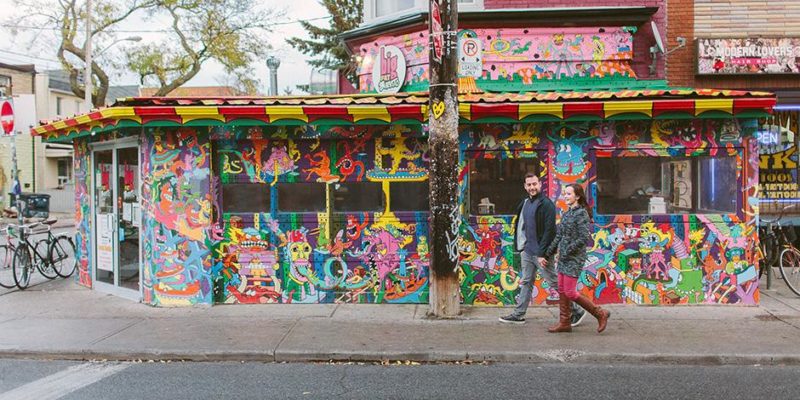
Kensington Market is practically an outdoor gallery. Murals, graffiti, painted storefronts and other bits of street art appear all over the neighbourhood, and part of the fun is simply spotting them as you walk.
If you’re into photography, this is one of the places where the walk itself becomes the attraction. I was obsessed and overwhelmed with so many photo ops and great frames! And if you want to go deeper, guided walking and food tours now make a lot of sense because a local can explain the stories behind the buildings, businesses and art rather than simply pointing at them.
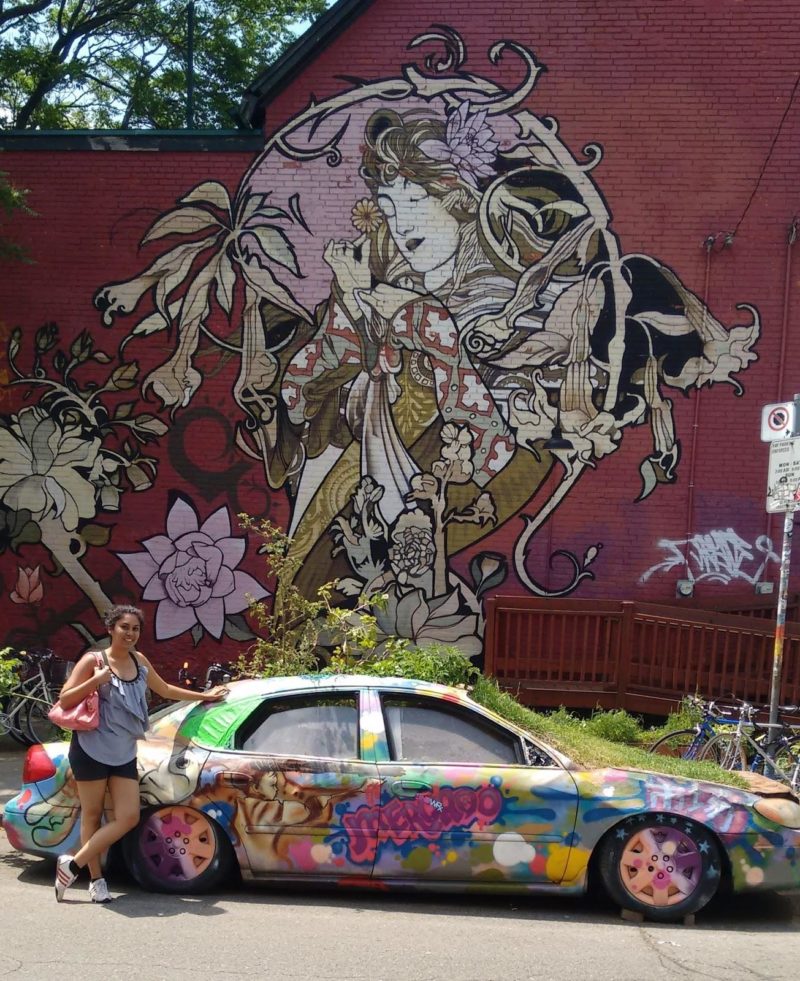
3. Look for the Garden Car
That’s a mural-covered old car that has plants growing out of it. It’s become one of those wonderfully odd Kensington Market photo stops. Just a note, that this is removed during winter and returns in the warmer months, It’s basically the neighbourhood’s unofficial mascot: that’s been sitting in the market for years, covered in layers of graffiti and art, that locals treat as a genuine local landmark.
4. Go Vintage Shopping
This market is known for its vintage and second-hand shopping, and you can spend a ridiculous amount of time rummaging through clothes, accessories, records, housewares and other random treasures. A thrift-shoppers paradise, really!
Courage My Love is one of the long-standing names in the neighbourhood, with a particularly eclectic collection of vintage and antique objects. But there are also plenty of smaller independent shops and half the fun is finding your own.
And if you don’t intend to buy anything? Good luck with that.
There are so many things you don’t need but end up wanting simply because they’re hilarious, bizarre or completely unlike anything you’d find in a conventional shopping mall.
5. Eat Your Way Around Kensington Market
You can eat your way around the world without travelling more than a few blocks. The sheer variety of cuisines! There’s everything from Israeli and Jamaican to Japanese, Mexican and Tibetan food. You’ll find everything from tacos and Jamaican patties to Vietnamese pho, Ethiopian food, bakeries, pizza and Portuguese sweets. And yes, try something you’ve never eaten before.
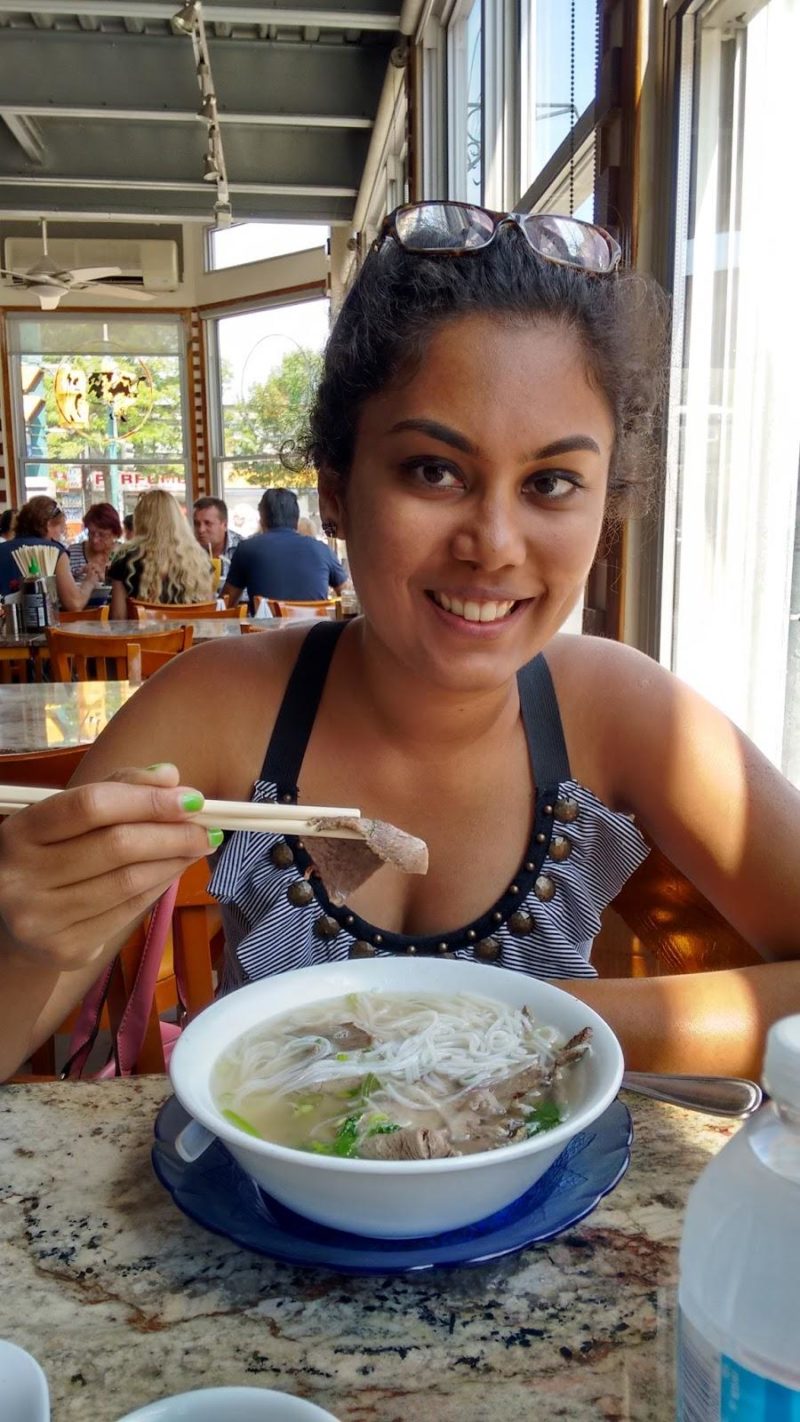
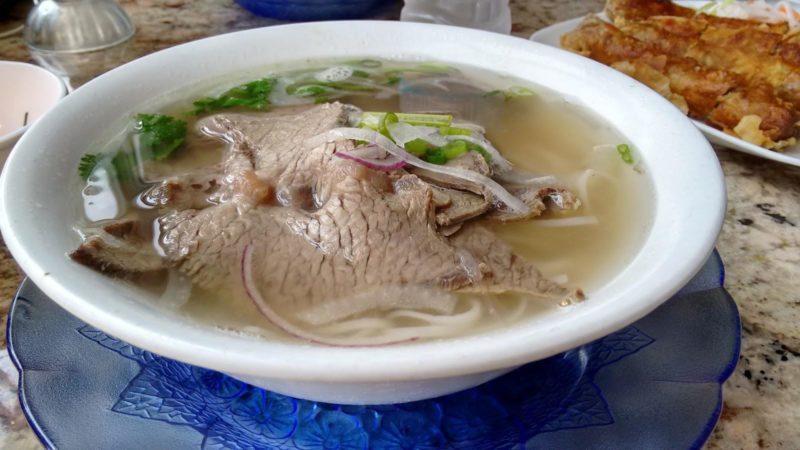
One of the best things about Kensington Market is that you don’t necessarily need to choose a famous restaurant before you arrive. Just go hungry, wander and pick something that looks interesting.
We stopped at a little Vietnamese restaurant and ordered Pho – a broth containing slivers of beef, glass noodles and herbs. It tasted considerably better than it looked.
Some places you could try are:
- Wu Wei Coffee and its matcha
- Frank Ranalli’s aubergine pizza slice
- La Chilaca Taqueria’s nopales taco
- Fresco’s Fish & Chips
- Jamaican, Mexican, Vietnamese and other international food throughout the neighbourhood
But as I’m sure you know, food businesses change, and what is brilliant one year may be gone the next.
6. Don’t Miss the Grocery Stores
So Kensington isn’t just about restaurants. Its independent grocers and food shops reflect the neighbourhood’s immigrant history, with ingredients and products from around the world packed into a few streets. Even if you aren’t cooking, they’re fun to browse.
7. Visit on a Pedestrian Sunday
If you happen to be in Toronto on the right Sunday, Kensington Market becomes a completely different experience.
On Pedestrian Sundays, sections of the neighbourhood close to cars and the streets fill with musicians, performers, food vendors, artists, pop-up stalls and people simply hanging out. The main programming runs roughly 12 PM–7 PM. Note that this doesn’t happen every Sunday.. there are certain Sundays earmarked for it – so plan in advance.
But here’s the catch. It gets busy.
Some people love that energy. Others, like me, find the crowds overwhelming.
8. Walk Into Chinatown
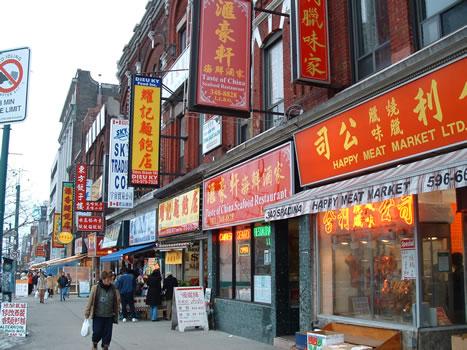
This is one of my favourite things about this market. The bohemian, slightly chaotic atmosphere of Kensington suddenly gives way to Chinese signs, lanterns, restaurants and shops. You just happen to notice when it hits you that the vibe has changed, all of a sudden. It’s almost like somebody changed the set while you weren’t looking. Although it’s called Chinatown, you’ll find all kinds of South and East Asian cuisine here too, menus often written only in Chinese characters
Because they’re right next to each other, Kensington Market and Chinatown make a very natural combined walking itinerary. If you’re visiting in the morning, start with Chinatown, since Kensington Market may not be fully up and running until early afternoon.
9. Take a Food Tour
Kensington Market food tours, and actually a good option if you want to understand the neighbourhood rather than just photograph it. If you’re a serious foodie, or have just a few hours to spend here, or want the history and storytelling aspects included in your experience, or even if you’re unsure of where the food places are – booking a walking tour is a good bet.
Is Kensington Market Worth Visiting?
Well, it really depends on what you want out of it. I’d say it’s one of the most exciting and authentic places to visit in Toronto. But others may argue that it’s dirty, underwhelming, quiet at certain times and not worth going out of your way for. That’s not untrue.
If you arrive expecting a beautifully curated tourist attraction with neat little stalls, spotless streets and a clear list of things to see, you might wonder what all the fuss is about.
But if you like messy, multicultural, independent neighbourhoods where you can wander into a weird shop, eat something you’ve never tried, photograph street art and have a completely random conversation with sellers, Kensington Market makes considerably more sense.
It’s not polished. That’s what I liked about it.
When Is the Best Time to Visit Kensington Market?
I’d choose a weekend afternoon, particularly if you want to experience the neighbourhood at its liveliest.
I went on a weekday mornings when it was quiet. If you want the biggest dose of Kensington energy, go on a Pedestrian Sunday.
If you want to actually browse shops and eat without being swallowed by a crowd, choose a regular weekend.
And if you want photographs without people everywhere, go earlier in the day.
How Long Do You Need in Kensington Market?
I’d give it 2–3 hours at minimum. That’s enough time to wander, shop, stop for food and explore some of the surrounding streets.
If you’re a serious foodie or vintage shopper, you could easily spend half a day here.
And if you’re combining it with Chinatown, you have even more reason to slow down.
Getting to Kensington Market
Kensington Market is roughly between College Street and Dundas Street West, and Spadina Avenue and Bathurst Street. I’d recommend public transport rather than driving.
Parking is limited and the streets are narrow, and on Pedestrian Sundays there are road closures. And once you’re there, walk.
Is Kensington Market Safe?
While I found the neighbourhood as welcoming and relaxed, there are parts of it that are dirty and run-down.
I’d use normal city precautions, particularly if you’re unfamiliar with Toronto, and visit in the daytime or busy periods for exploring if you’re visiting for the first time. Also remember that this is a real residential neighbourhood, not a theme park created for tourists. People live here. Businesses operate here.
And the slightly rough-around-the-edges character is part of what makes Kensington what it is.
TGG Tips for Kensington Market
- Wear comfortable shoes. You’re going to walk more than you think.
- Don’t arrive with a rigid itinerary. Half the fun is discovering things you weren’t looking for.
- Go hungry. There is far too much interesting food to arrive after breakfast and pretend you’re not going to eat.
- Combine it with Chinatown. They’re close enough to make a very easy walking route.
- If you’re visiting on a Pedestrian Sunday, take public transport. Road closures make driving considerably less appealing.
- Bring a camera. The street art, painted houses, shopfronts and people make Kensington a photographer’s playground.
- If you’re shopping for vintage, leave room in your suitcase. You’ve been warned.
- Don’t judge it against a conventional tourist attraction. Kensington Market isn’t supposed to be polished.
A wonderful thing about Kensington is that people from every walk of life end up here — rich, poor, young, old, every ethnicity and nationality you can think of, all bumping into each other on narrow sidewalks and one-way streets. There’s barely any parking, and it’s a genuine obstacle course to walk through. I loved every second of it.
